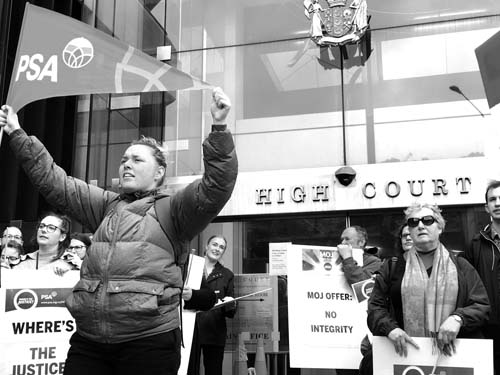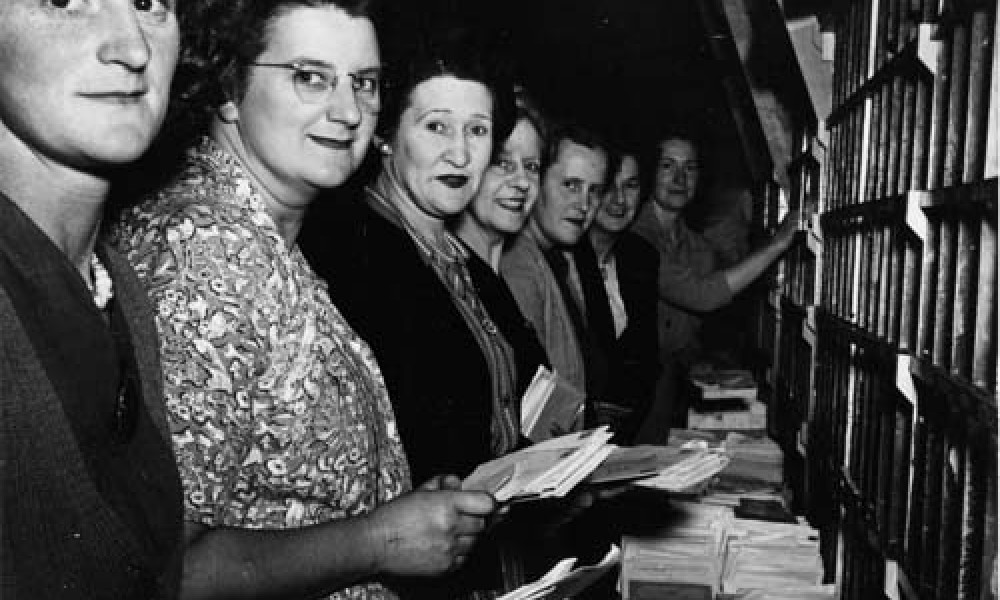
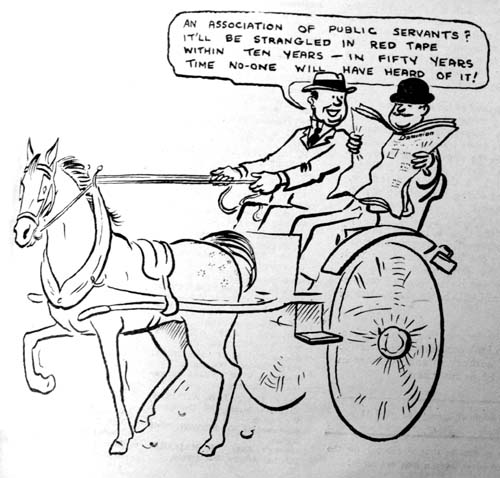
In 1913 when the PSA began, public service workers were living in a very different world: the biggest department was the Railways and one of the PSA’s first victories was a special allowance for those who had to use their horse for work.
One thing that hasn’t changed was that people wanted good secure work and a voice in their workplace. They knew that these changes could only be achieved by working collectively.
Over the past 110 years PSA members have won some extraordinary victories. In 1974, dental nurses marched on Parliament and the government conceded their demands before the protest had even dispersed. The delegation who had been meeting with ministers came out and told the waiting nurses: ‘they have given us everything we wanted’.
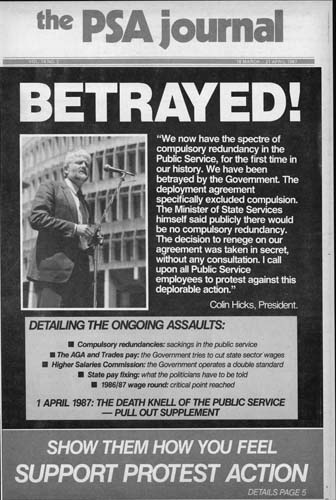
The PSA has also survived substantial attacks. In 1987, the
government restructured the entire public service. Until then, public servants were paid according to their occupational group, not their department. To protect wages and conditions, the PSA negotiated a base document with
the State Services Commission that acted as a starting point for collective agreements in each of the departments. The negotiators’ hands were strengthened by nationwide protests against the changes.
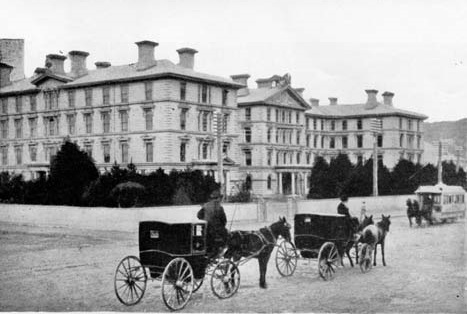
Government Buildings, Wellington: "the biggest wooden building in the world" as it appeared when the PSA was founded in 1913.
Championing equal pay
In 1913, most public servants were Pākehā men, and so were most PSA members. While this limited the PSA’s worldview, the union took some early steps towards solidarity.
At its very first conference, the PSA passed a motion supporting equal pay for women – at that time it was normal and fully legal for women to be paid less than men for doing the same job. The following decades saw some small equal pay victories, but it was when women in the PSA started to get together in the 1940s and 1950s that the campaign gathered momentum.
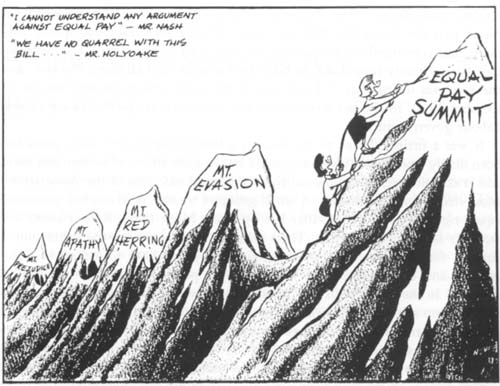
Workers in the public service gained equal pay in 1960. But work that was predominantly done by women was still undervalued – and still is. A 1960 cartoon showed women climbing a mountain labelled the equal pay summit, subtitled, “Well we’re practically there, but it makes you wonder why it has taken so long”. A comment even more true 63 years later – when we’re still trying to settle pay equity claims.
Confronting racism
PSA members also fought for equity in the wider world. In 1959, the Papakura Hotel refused to serve PSA member Dr Harry Bennett, because he was Māori. His workmates and
wider PSA members supported him and opposed this racism.
The PSA gathered evidence of discrimination as part of a push for anti-discrimination legislation. At that time many Pākehā pretended that racism was something that happened in other countries; Māori members showed Pākehā both within and without the PSA that this wasn’t true.
The PSA went on to play its part in wider anti-racist movements, such as opposing the 1981 Springbok tour, and supporting the case that led to New Zealand courts acknowledging Te Tiriti for the first time since 1847 and defining the principles of the Treaty of Waitangi.
Changing and thriving
The past 110 years has seen extraordinary changes to what public services are offered and how they are delivered. Back in 1959, Treasury installed the first computer, and nobody knew what impact this new technology would have on jobs. The PSA developed its first policy on computerisation in 1960 – workers should be consulted over the use of new technology and that automation should improve conditions of work and reduce hours of work rather than decrease conditions – a position we still hold today.
Public services that we take for granted today, such as conservation, universal superannuation, and a public health system did not exist in 1912. The PSA begun entirely within what was known then as the core public service and has adapted as the shape of the State changed. Responsibility for “mental hospitals” (as they were then known) moved from the Ministry of Health to the Hospital Boards (the precursors
of DHBs). The PSA continued to represent these workers, and they were the beginning of our health sector, which now has 24,000 members.
As the way public services are delivered has changed, the PSA has changed too – both our Community and Public Services and State Sectors have their origins in the restructuring of public services in the 1980s and
1990s. Throughout these changes the PSA has always argued for workers to have a voice, within high quality services that are not provided for profit.
In the past 110 years, the PSA has operated through 36 elections and 14 different governments. As the 15th government begins, one of greatest strengths of the PSA is the work of generations that have gone before us. We have hard won victories that we can build on, such as the current Pay Equity legislation, and also the strength of knowing that whatever governments do, members respond collectively through the PSA.