
Tēnā koutou and welcome to the first issue of Te Mahinha Ora for 2023
Many members and their whānau in Northland, Tāmaki Makaurau, Tairāwhiti and Hawkes Bay have not had the start to the year any of us would have wanted, experiencing first hand the impact that climate change is now having on our lives. Widespread flooding, and then Cyclone Gabrielle, devastated many communities. We stand with you as you start the long process of rebuilding.
The PSA will be participating in the Government’s Cyclone Recovery Taskforce, which is looking at the adequacy of the immediate recovery efforts, as well as what factors are important to shift the gear on planning for future resilience. Climate change is real, and we can expect severe adverse weather events sadly to become much more common. We believe that it is vital that the impact on workers and working lives, and the communities we live in, are considered equally alongside expected economic impacts and mitigation strategies along with Just Transition principles. It’s good that members’ experiences will be a key input into the Taskforce’s mahi.
As public and community workers, we’ve gotten used to responding to natural disasters, terrorism and the pandemic over the last few years. Responding rapidly – with practical and empathetic advice and support has become what we do, built into the DNA of our working lives. So much so that I fear going the extra mile, as so many our members did over February, March and since, risks being taken for granted. In reality it is the increased investment in workers and public and community services since 2017 that meant we could provide surge capacity to respond immediately when communities needed us most. In this issue we profile just a few of our members whose mahi helped us all to navigate the past few months. To them and so many more members across the motu, we recognise your service.
It has therefore been very disappointing to see that disparaging the work of public and community service workers has once again featured in rhetoric coming from centre-right parties. As your President I have been vocal in pushing back against ill-informed commentary on the growth of the public and community service
workforce and criticism of the work we have been asked to do for New Zealanders. We recall only too well how dispirited and ill-equipped many members were after a decade of underinvestment before 2017. In this issue we also discuss our plan to run a positive campaign this election year seeking continued investment
in public and community services, and how you can support this with your colleagues, friends and whānau.
Nāku iti noa, nā,
Benedict Ferguson (He/Him)
President Te Pūkenga Here Tikanga Mahi | PSA
Members across the union rallied behind the campaigns, attending online webinars; joining up new
colleagues; wearing green, pink and orange; and sharing messages of support for those who were in bargaining.
Delivering real benefits
Our campaigns are now beginning to deliver real benefits, with members in over a dozen organisations ratifying new collective agreements containing pay increases and improvements to working conditions.
For members in public service departments and the state sector, these improvements have been underpinned by the public service pay adjustment agreed between the PSA and the government last September. The negotiations were spearheaded by the CTU. The agreement provides for a common flat-rate adjustment
to salaries while also allowing other issues, including addressing longstanding pay inequities experienced
by members in some workplaces, to be bargained at the same time.
The PSA is continuing to press Ministers to extend the coverage of this agreement to workers in community public services where the Government as funder effectively sets the envelope employers have available to also increase pay as the cost of living rises. Most recently PSA National Secretaries have had meetings with the new Prime Minister Chris Hipkins, Public Service Minister Andrew Little and Health Minister Ayesha Verrall about agreeing a process to deliver improved pay for community-based workers.
Hard-won wins
Recent settlements members have ratified have been hard won and included both increases to base rates and member-only lump sums which recognise the benefit employers gain from being able to bargain collectively with the PSA. Every settlement has also included a range of agency-specific improvements. As a result of hard work by your bargaining teams there has been high engagement by members during ratifications, which have been strongly supported.
Agencies where members have ratified agreements include MFAT, NZQA, Oranga Tamariki, Statistics New Zealand and the Ministry of Education. At Oranga Tamariki, a new protocol for dealing with high social work caseloads is included, while at the Ministry of Education a new section in the collective agreement is devoted to Kaimahi Māori which is precedent-setting and provides a number of entitlements and provisions to honour and acknowledge the work of Māori public servants.
Revised pay guidance
These agreements provide the impetus for upcoming negotiations with other agencies as existing agreements expire. As we went to press, Te Kawa Mataaho the Public Service Commission published revised pay guidance which provides a refreshed framework for employers to use in upcoming pay talks. Following advocacy from the PSA, the new guidance acknowledges the case for continued movement on pay, particularly but not only for the lowest paid, and to close ethnic and gender pay gaps which members have asked to be prioritised.
We will also continue to bring to the bargaining table agency-specific issues with pay and conditions that
members want to see addressed alongside seeking cost of living improvements.
PSA Acknowledges the Passing of Chester Borrows and Georgina Beyer
Chester Borrows
Mr Borrows was one of very few from his side of the political spectrum who welcomed the opportunity to get
alongside some of New Zealand’s disability support workers. In 2009, Mr Borrows accompanied a worker to
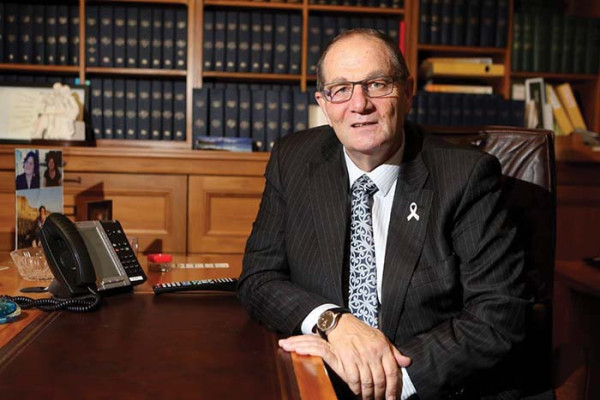
their job in a community-based disability service house.
He asked compassionate and astute questions about the responsibilities and skills of the work and the positive difference it was making in the lives of the people being supported. He was a supporter of equitable treatment and value for workers, in one of the lowest-paid sectors of the workforce at the time.
The union’s campaign, Up Where We Belong, successfully challenged the fairness and legality of aspects of the working conditions and pay for disability support workers. Through this work, and with the support of politicians such as Mr Borrows, workers are now paid a wage for sleepovers instead of token allowances, home support workers are paid for time travelling between clients, and an initial pay equity deal was struck.
Georgina Beyer
Ms Beyer was the first transgender mayor and Member of Parliament. She helped to pass the 2003 Prostitution Reform Act, which decriminalized sex work. In 2004, she helped pass a law allowing same-sex civil unions. Often described as a trailblazer, Georgina paved the way with her support for progressive policies such as LBGTQI+ rights and Māori rights.
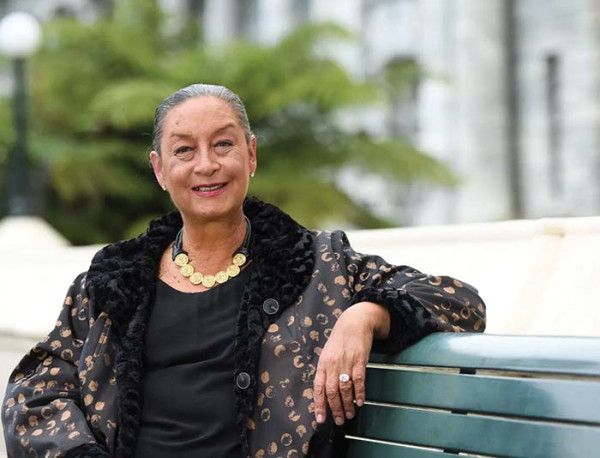
Out@PSA committee member Kerryn Pollock recalls interviewing Georgina as part of Heritage New Zealand
Pouhere Taonga’s Rainbow List Project. “It was hilarious and amazing. I came away from the interview knowing I'd been in the presence of an absolute legend.”
Georgina’s presence in Parliament and local government helped a generation of LBGTQI+ people see themselves reflected – and respected– in society. “As someone from regional Aotearoa, who learnt about the
world of takatāpui later in life, the first person I learnt about was Whaea Georgina,” says Out@PSA committee member Danielle Marks. “For someone to live their truth in regional Aotearoa was something
I never thought was possible until learning about Whaea Georgina. I look forward to growing old in my
transness like her. Moe mai rā e kui.”
Win for Nelson disability workers
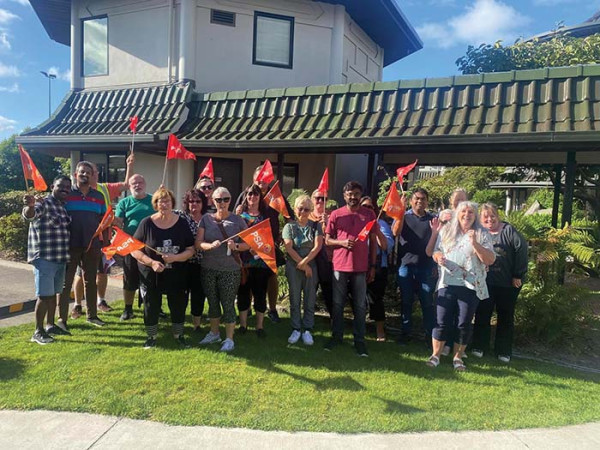
After inadequate offers during bargaining, disability and support workers in the Nelson region voted to take strike action. Days before the strike action was set to go ahead, an improved offer was presented and taken to members.
We are now please to report that Te Whatu Ora came back with a much better offer, and this has now been ratified (voted in) by our members.
The offer includes much-needed recognition of the varied work they do, and includes a one-off payment of
$1500 and sees the introduction of a meetings and training clause of three hours paid (if not in work time), a weekend/evening allowance and a sleep disturbance clause.
Members are finally getting recognised for the unique form of work they do.
Community Corrections to go on strike
One thousand nine hundred Community Corrections workers have voted to strike three times over April, after nine months of negotiations.
Low pay and high workloads are the key issue for members. The strikes will involve PSA Community Corrections members walking off the job for three two-hour strikes, three weeks in a row.
This will leave residential facilities managed by Corrections unstaffed, Courts will not have Corrections representatives, programmes will cease to run in Prisons, Community Work crews will not be able to
operate, electronic monitoring will not be monitored and sentences and orders such as Parole and
Release Conditions will not be managed.
PSA supports first climate action of 2023
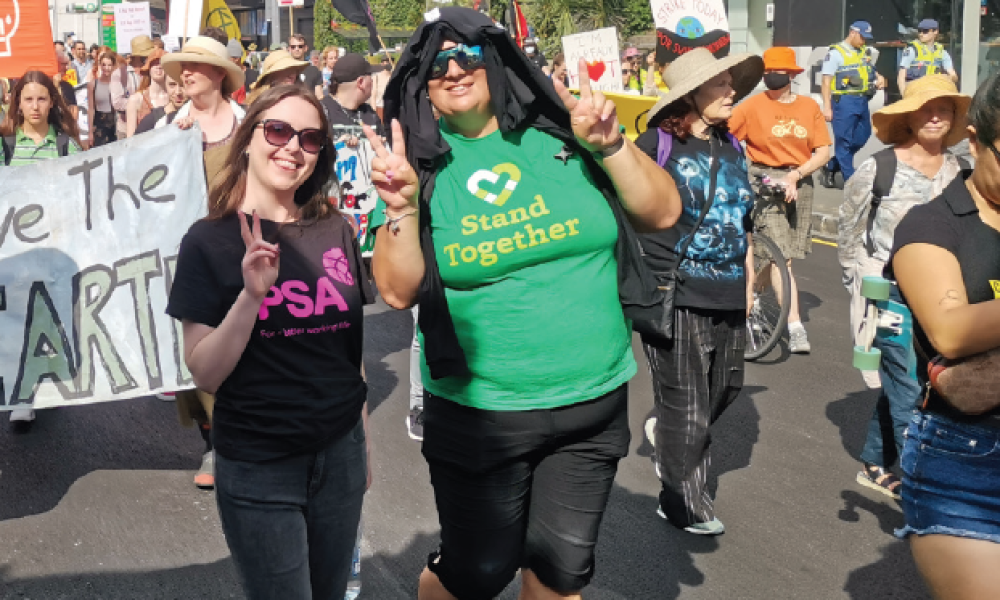
On Friday, 3 March, PSA members and union staff across Aotearoa joined thousands of students at the
Climate Strike. The marches in Kaitaia, Auckland, New Plymouth, Wellington, Christchurch, Dunedin and Wanaka called on the Government for more urgent action on climate change. Union members joined on their lunch break, waved from windows, and marched while on leave. A small but increasing number of workplaces like Forest and Bird allowed staff to attend during work hours.
When Cyclone Gabrielle arrived in Hawke’s Bay, PSA member and Waka Kotahi auditor Caroline Reddie
found her home without power or connection to the outside for five days. On the 17th, when with the help of a generator she got connected to the internet via Starlink, she realised the extent of the damage and immediately answered the call to volunteer alongside dozens of other public servants.
“At the Civil Defence headquarters, my primary role was to source anything and everything requested,” Caroline told Te Mahinga Ora, “from food supplies for cut off communities, to medicine for patients, to torches for the army so helicopter operators could see better at night when doing heli-drops.”
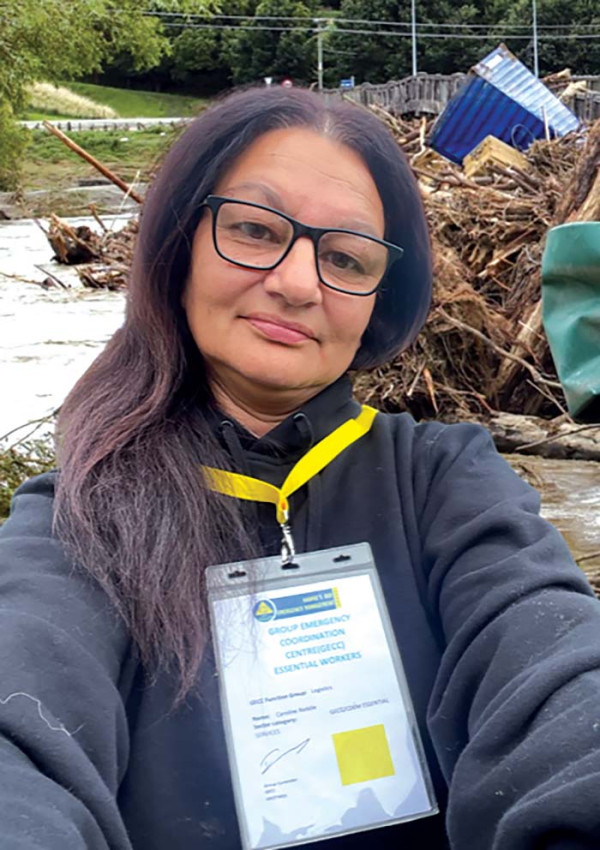
With experts from the National Emergency Management Agency flown in from around the country, local public servants like Caroline provided the on-the-ground local knowledge that ensured the cyclone response would have the strongest impact on those in need of assistance.
As a local, Caroline made a special effort to procure from local suppliers wherever possible, to help keep money flowing into the Hawke’s Bay economy. One example of this was connecting with a Wairoa whiteware
store to procure a new washing machine for a local marae, where many evacuees were staying and had overwhelmed the old machine there.
From local to national
Meanwhile, in Wellington, PSA National delegate Rose Mareko had also answered the call. Several
weeks earlier, Rose had jumped at the chance to support Aucklanders affected by flooding to find new homes through MBIE’s Temporary Accommodation Service, and when asked if she’d extend her secondment to provide the same support to the regions hit by Gabrielle, she immediately said yes.
“At the moment the people we’ve supported into temporary accommodation are almost all still there – they won’t be back into their homes probably until next year,” Rose said. “So we still do regular case management with them, check on how they’re going. They want to know we haven’t forgotten them, so regular contact is critical.”
Rose is Samoan, which meant that she was often asked to work with Pacific families in particular, including some who felt more comfortable speaking Samoan than English. But it wasn’t just the language barrier where Rose was able to provide extra support. “Speaking Samoan definitely helped put people at ease, but it’s not just the language – it’s understanding the family dynamics, who’s living with who, the different roles people
play in Pacific families and how that might change their housing needs.”
Communities caring for each other
For Tamara Baddeley, a home support worker in Napier, she found that for some of her regular elderly
clients she became their only link to the outside world.
“I saw all of my clients every day – even doing visits when I wasn’t rostered on – and called them to
do welfare checks and make sure they were doing ok physically and mentally.”
Going above and beyond seemed like the right thing to do to Tamara, who said that “just by being there
I was able to give their whānau reassurance that their loved ones were still being cared for in difficult times.”
With power still out and news from the outside world hard to come by, Tamara would sometimes bring
her clients out to her car so they could listen to the news on the radio and hear the latest about what was happening.
She also saw signs of communities coming together to look after each other – some of her clients only
had electric cooking facilities, but neighbours banded together to bring hot meals to them which they
otherwise wouldn’t have been able to have.
It’s these strong collective values that come second nature to union members, and Hastings librarian
Fiona Frost saw them every day. As the library was initially closed in the immediate aftermath of Gabrielle,
Fiona joined other Hastings District Council staff helping to provide for people’s needs.
At times the first person you’d see after being rescued by boat or helicopter, Fiona’s job was to greet you, listen to your story and connect you with the various services depending on your needs – food, accommodation, medicine and more.
“It’s good that we were there,” Fiona noted, “sometimes people just needed to be able to tell their story,
it was needed for them to be able to move forward. Difficult at times for us, talking to people who had lost everything.”
In late March, the library is back open and Fiona is back in her day job, but the impact of Cyclone Gabrielle is still ever present. “Even now people still just come up to the desk and want to talk. We’re happy to listen, that’s just what librarians do. We’re so used to dealing with the public face to face.”
“It is incredible to see what communities have done, not just the official groups doing things, but little communities and neighbourhoods just getting together and doing things that need to be done. Going out to the hubs and seeing what people have done and are continuing to do is amazing,” said Fiona.
The clean-up in all the areas impacted by Cyclone Gabrielle will take a long time, and rebuilding people’s lives perhaps even longer. You can be sure, however, that PSA members from across all parts of our union will be at the centre of this, ensuring that together, we’ll get through.
Asher Wilson-Goldman

We know that most New Zealanders trust the people who provide community and public services, but unfortunately that hasn’t stopped some political parties from trying to blame our hard-working members for a variety of woes.
In recent months, the National Party has proposed cutting 14,000 jobs in the public sector
When asked to name which jobs would be cut, opposition leader Christopher Luxon said he’d cut 200 communications staff from the Ministry of Health – five times as many as the Ministry actually has.
Public service jobs also bring money right across the country, supporting local business in not only our biggest cities, but also smaller towns and rural areas all over the country. Fourteen thousand jobs would
making redundant every public service worker in Northland, Bay of Plenty, Tairāwhiti, Hawke’s Bay, and
the entire South Island.
Union members in the health sector know all-too-well about what happens when so-called “back office" staff are cut. For many years under the last National government, District Health Boards had a cap on admin and clerical staff numbers. The result of this was that as workloads grew, hospitals were prevented from recruiting admin and clerical workers, and administrative work increasingly had to be done by clinical staff, leaving them less time to see patients.
Threatened job cuts
In the core public service, cutting “back office” staff could mean fewer HR staff to manage recruitment, health and safety and professional development. It could mean fewer policy staff, without the capacity to effectively engage with the public on new policies and legislation. It could mean fewer communications staff, making it harder for the public to know about and access the critical services they are entitled to and need.
It’s up to us to make those numbers real. Every one of those 14,000 jobs the National Party proposes cutting is done by a real person, working hard to deliver for all New Zealanders. Every one of those people has friends and whānau who care about them, and people who rely on them.
As we get closer to the election, imagine if all 85,000 of us talked with our loved ones, explained the importance of what we and our fellow union members do, and built a strong base of support for parties willing to commit not just to keeping the status quo, but to strengthening community and public services further for everyone’s benefit.
If we talk to just three others each, that could be more than 10% of New Zealanders who could be encouraged to vote for a more united society, not for division and blame. That’s a powerful constituency and hard for political parties to ignore.
By the time you are reading this, the election will be less than six months away. Let’s use that time to speak out and create support for community and public services.

The PSA supports public service agencies’ need to maintain political neutrality and encourages people working in the public sector to be actively involved in exercising their rights of political expression during election years.
Your vote counts! It's time to:
- Get ready! Enrol to vote and encourage your friends and family to do the same. You can stand for election!
- Get informed! Seek out and share good information (not disinformation).
- Get involved! Being politically neutral at work does not stop you from being politically active outside work. You can volunteer to help out any political parties you support, for example with leaflet drops, or by having an election sign on your fence.
- Don't forget to vote!
In your own time
You can do all of this in a way that supports your agency’s obligation to maintain political neutrality as long
as you do this in your own time and don’t:
- Identify your opinions with, or give the impression that, you are speaking on behalf of your agency
- Use information obtained in your role that is not in the public domain for political purposes
- Use your organisation’s resources or premises for electioneering.
The same rules apply to social media as to any other form of communication.
At work
A central element of New Zealand’s constitutional arrangements is that the Public Service is politically neutral. The PSA encourages members to:
- Share PSA campaign materials in your workplace. If you’re putting up posters etc, ensure these are not visible to the public. We will be running an election campaign, and as the election approaches this will become more visible and active. We campaign on issues, not on which parties to vote for.
- Carry out the functions of your organisation without letting your personal political beliefs influence how you do your job
- Support your organisation to provide robust and unbiased advice
- Respect the authority of the government of the day.
Where to get more information
Te Kawa Mataaho the Public Service Commission has published full guidance which can be found on
the web:
Read the Public Service Commission's General Election Guidance 2023
For more information, or if you have concerns about the way in which your agency’s code of conduct or the Te Kawa Mataaho’s guidance is being applied, please do contact your PSA organiser or Te Roopu Tohutohu Manaaki the PSA Member Advice and Support Centre.

Too much of the Three Waters debate has been driven by a small but loud minority who choose to ignore the
important purpose of the reforms, which are all about making sure we have drinking water, wastewater and stormwater services that are safe and fit for the present and the future.
That means drinking water that’s safe and clean. It means properly functioning wastewater and stormwater networks that don’t degrade our waterways and beaches. It means catching up on decades worth of under-investment in many parts of the country, as well as upgrading infrastructure like stormwater and wastewater pipes so it can cope with challenges like the changing climate.
Vital infrastructure
Recent extreme weather events have been a reminder of just how important stormwater networks are for keeping us safe and as the climate warms they will become more common. The level of work required over coming decades is much bigger and more expensive than any council can deal with on their own. The
reforms enable pooling of resources across multiple communities and the ability to raise substantial new
investment to deliver water services as affordably and equitably as possible in the future.
PSA local government sector committee member Brad Hedger works in water infrastructure. He says that “we have numerous small wastewater treatment plants that serve a small payer rate base that were designed last century, and the community is demanding upgrading. The environmental effects, solutions and capital are substantial which means a small council would struggle to afford or have the in-house capacity to investigate alternative solutions to meet the community’s needs.”
A better way forward
The reforms are an opportunity to build a system that will give workers the resources, the support and the scale to be able to do their best work building and running high-quality infrastructure.
Bringing water services together within larger water services entities, instead of over 60 different councils and CCOs, will provide economies of scale that allow for more specialisation and training, and better career pathways. The reforms will enable the estimated $120-$185 billion needed over the next 30 years for essential infrastructure investment to be raised – funds existing providers cannot access because of their constrained balance sheets.
Union participation
The PSA has been actively participating in the reform programme, engaging constructively with the Government, the select committee that considered the legislation and now with the Transition Unit implementing the new water services structure, to ensure that the reforms are better for everyone, including water service workers.
Earlier this year the Prime Minister announced that the Government is looking at refocusing some aspects of the reforms, and it’s possible that by the time you’re reading this we’ll know more about whether the model will change and how. We believe this refocus is a good opportunity to refine the policy, however the need for change is undeniable.

The Disinformation Project is an independent research project looking at misinformation and disinformation within New Zealand. Kerry Davies (National Secretary, PSA) sat down with Kate Hannah from the Disinformation Project to find out what is disinformation, how it is playing a part in our members’ jobs and what we can do to counter it.
To first understand what disinformation is, we need to understand the different types of disinformation, what they are called and what they mean. Kate explained that there are three types of disinformation:
- Misinformation: “false information created without the intent to hurt others.”
- Disinformation: “false information created with the intention of harming a person, group, or organisation.”
- Malinformation: “true information used with ill intent.”
Who is influenced by misinformation and why?
Interestingly, Public Service workers are less likely to be influenced by misinformation. Kate says that is due to their roles requiring lateral/critical thinking. A lateral/critical thinker will question the source and investigate to validate the information.
However, simple and accessible information is often taken for granted in increasingly time-poor societies.
How is the spread of misinformation and disinformation affecting how our members are treated?
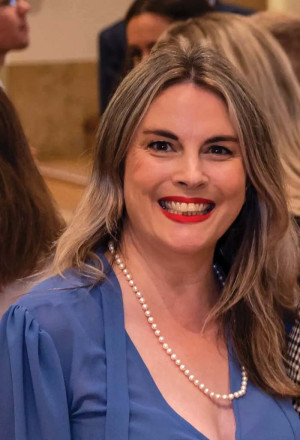
Kate explains that when language is consistently used to undermine groups of people, these people lose their trustworthiness. Dehumanising language used towards others diminishes trust in these groups and can create an environment of concern and sometimes anxiety stemming from those who are the target of dehumanising language.
Public service workers are often labelled as “bureaucrats” or in some instances "bloated bureaucrats" which diminishes trust and fuels concern that resources are going to those who already are supposedly well resourced. Dehumanising public service workers through language suggests they are over-resourced and disconnected from the public. This undermines discussions about creating conditions for our public sector to thrive and to provide high-quality services to those who need them. In fact, it does the opposite. Targeting people through social media has become very frequent. The public service is one issue of a long list of hot-button issues such as vaccination, gender, race, religion, or sexuality.
The Disinformation Project is working with social media teams within ministry departments to ensure public messaging is clear and cuts through disinformation that would hinder people from being able to access vital public services.
Why are women public servants targeted more often?
Misogynist language is often used to de-humanise women’s ideas, knowledge and experience in society. Misogyny is based on the belief that women are worth less than men. It is often used to dis-credit women, to spread hatred and prejudice against women to maintain traditional social roles and responsibilities. Female public service workers are targeted by misogynist attacks. They are not safe from personal attacks via phone
or email.
What can be done to eliminate misinformation in the workforce?
The Disinformation Project is working with agencies to create deliberate strategies to try to counter some of the impacts on workers. Kate says success in countering these issues requires an all-hands approach: it needs to cover what leaders and managers can do and what people can do in their own teams. However, the biggest impact comes from having a practical approach that brings HR teams into play to create better transparency and associated support processes in place for workers.
Find out more about the Disinformation Project

In recent years, flexible work has shifted towards becoming the norm for many PSA members. With the pandemic proving that many jobs can be done successfully from home, and the shortage of workers making managers more open to requests for flexibility, there’s an opportunity to set new norms of how we work and improve our ability to balance work with other, more important parts of our lives.
While for many people flexibility has meant the ability to pop out and pick the kids up from school, or to work from home a couple of days per week, some PSA members are pushing the boundaries further still. This includes people going fully remote, with the ability to move to towns with more affordable housing while retaining jobs based in Wellington or Auckland.
Expanding flexible work
In a recent big step, PSA members at Ngā Taonga Sound & Vision, have recently pushed the boundaries of flexible working with a shift to a 32.5 hour (or four-day) working week – without a loss in pay.
Nell Woodward, a PSA member at Ngā Taonga, says the 4-day week was a major factor in her accepting her job in late 2022. “I feel a lot more rested after a three-day weekend than after a two-day weekend. I think I am more productive at work as well,” she told Te Mahinga Ora, “I like to use my Friday to catch-up on ‘life admin’ things – household chores, doctors appointments, gardening etc. I have enough time to catch-up on rest, catch-up on chores, and socialise with friends and family, whereas before I always felt like I had to choose just two of those things.”
Before committing permanently to a 4-day shift, Ngā Taonga ran a trial
This found a 30% improvement in staff wellbeing, and Nell’s example shows there are recruitment benefits as well, particularly for NGOs who may not be able to compete on salary with other organisations.
Research by 4 Day Week Global from 91 trials of the concept found that:
- 91% of organisations are continuing the four-day week after the trial
- for workers life and job satisfaction and physical and mental health went up and burnout and stress went down during the trial
- women saw greater improvement in outcomes than men
- time spent commuting (and by proxy carbon emissions) was reduced.
All this flexibility is an undeniable positive for the people who get to use it, but we do still need to be mindful. Some jobs are harder to make flexible – for instance, customer-facing roles may not be able to be done from home, and shift work is harder to duck out of for a 45-minute haircut in the middle of the day.
Having a broad menu of flexible options, rather than just focusing on one type of flexibility, gives us the best chance of everyone being able to benefit.
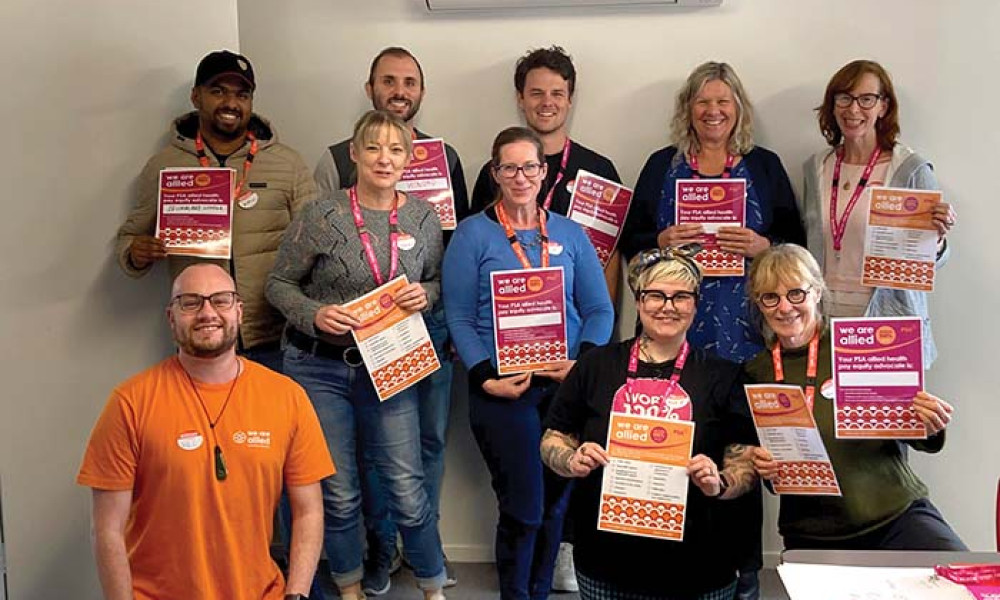
With this victory secured, this crucial group of health workers turned their attention to the next challenge on the horizon: Pay Equity. With around 15,000 members in over 70 different professions, the APHST Pay Equity claim has the potential to be one of the most complex Pay Equity processes the PSA will undertake. However, thanks to the incredible momentum, enthusiasm and emerging generation of new union leaders from the We Are Allied campaign, these members were in an excellent position to rise to the challenge.
Pay Equity can be hard to understand. It represents a paradigm shift in the way members think about the value of their work and the structure of their pay. That’s why our approach to this Pay Equity claim is deeply rooted in the importance of education, as well as continuing our journey to empower APHST workers to take their industrial rights into their own hands.
In September and October 2022 we embarked on an Allied Pay Equity training roadshow. Over the course of two months our Pay Equity team visited eight cities around New Zealand and conducted 11 different training days – resulting in the recruitment of over 200 member Pay Equity Advocates.
Advocates mainly consisted of a new generation of member leaders who emerged over the course of the
We Are Allied campaign, as well as a number of committed PSA Delegates. The training sessions also produced about 20 new PSA Delegates, as Allied Health members stepped up to the next stage of their union journey.
Advocates participated in sessions about:
- The history of the union movement and Pay Equity.
- The concepts, definitions and processes that underpin a Pay Equity claim.
- Pay Equity growth strategies.
- The PSA’s campaign to deliver Pay Equity.
With over 200 trained and empowered Pay Equity experts embedded in workplaces across the country, we are now in a great position to deliver Pay Equity to an energised Allied Health workforce. Our team is exploring how similar training structures can be rolled out across other Pay Equity claims – so watch this space!
Kia pai te rā,
The PSA Allied, Public Health, Scientific and Technical Pay Equity team.
The Allied, Public Health, Scientific and Technical professions consist of around 15,000 health workers in over 70 different professions. Over 11,000 are members of the PSA. Significant professional groups include Social
Workers, Occupational Therapists, Physiotherapists, Laboratory Scientists, Pharmacists and Sterile Sciences Technicians.
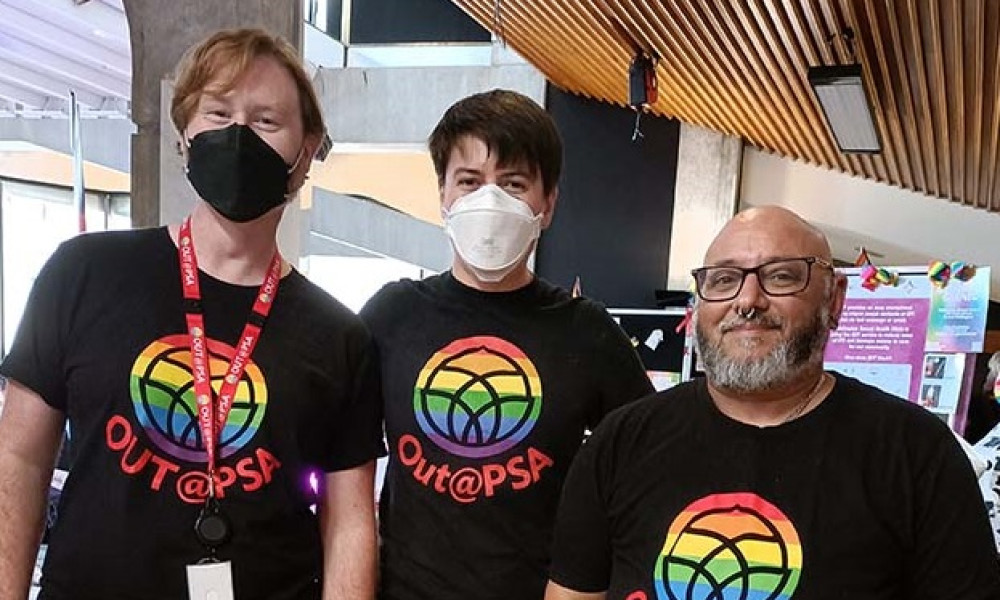
Last month, as people from all over Aotearoa completed the census, for the first time questions about sexuality, gender, and variations of sex characteristics were included and will provide a solid information base to continue to improve services and support for Aotearoa’s Rainbow community in the future.
Having rainbow and intersex communities counted in census data will enable groups and individuals to better advocate for rainbow and intersex communities, and for government decisions to better reflect their needs, says Simon Mason, Deputy Government Statistician. “Policy makers will be able use census data to shape policy, and decisions about the funding, location, and provision of services used by rainbow communities can be better targeted.”
“It’s great that we are being counted, and it’s long overdue,” says Dave Merchant from the Out@PSA committee. “We need real recognition at all levels, and that includes official information sets like the census, to make sure governments and others make provision for our rainbow communities.”
With better information on LGBTQI+ communities comes a responsibility to make good use of it to inform policy. There’s still some way to go in that regard; for example, the Ministry of Health Manatū Houora’s development of new health strategies so far hasn’t included a plan for rainbow communities, despite the inequities in health outcomes that exist for LGBTQI+ groups.
Out@PSA committee member Danielle Marks says, “Each one of us now has had the ability to whakamana (empower) our identities through the census. More work needs to be done to continue this journey, but I am grateful for all the mahi by members of our Rainbow communities in advocating for us finally being counted.”
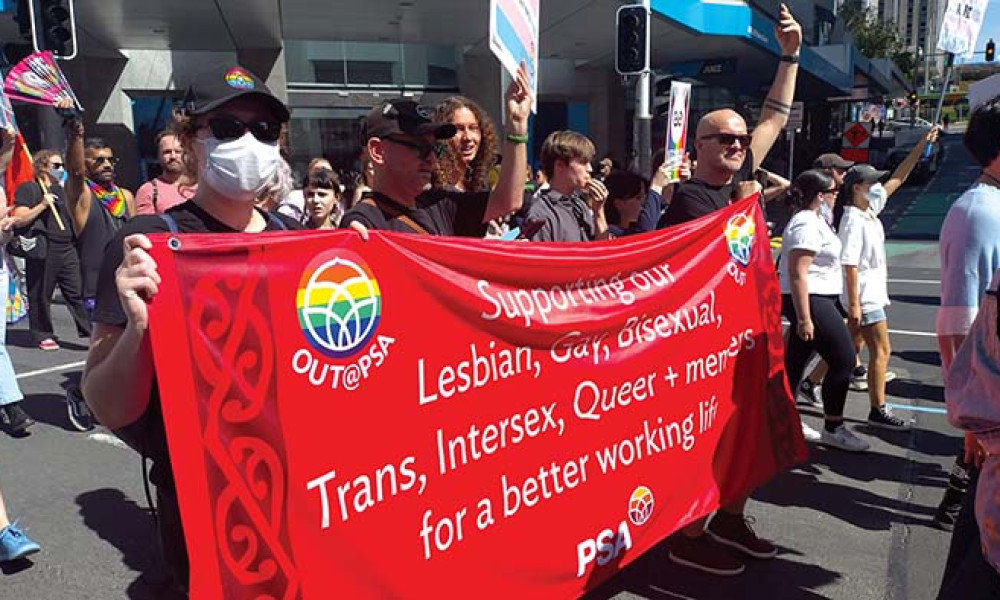
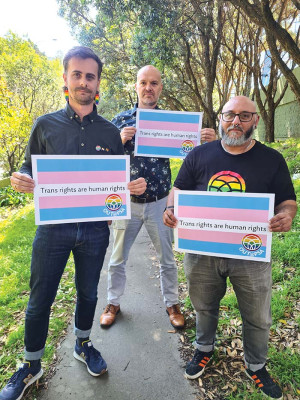
The recent events in Wellington and Auckland demonstrated the importance of strongly opposing any attempt to portray trans people as a danger to other women or their spaces. This harmful rhetoric only serves to divide us and detract from the real issues affecting our communities.
The PSA has a long history of standing against fascism and discrimination. We continue to do so alongside the LBGTQI+ communities, with many of our Out@PSA network and wider membership attending the rallies.
The PSA continues to urge everyone to reject any fear-based campaigns or stories that seek to pit members of our communities against one another. Let us come together and work towards a more inclusive Aotearoa New Zealand, where everyone's human rights, including the rights of women and trans individuals, are respected, and upheld.
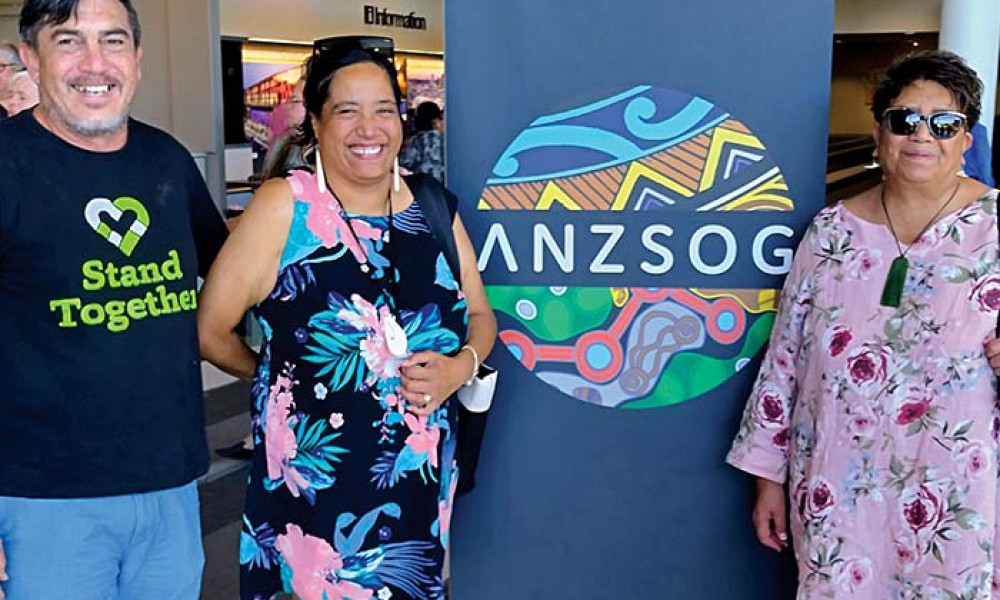
Over 750 people, both from the public sector and indigenous groups, and including a small PSA staff delegation led by PSA Kaihatu Janice Panoho, attended kanohi ki te kanohi – with hundreds more online – hearing First Nations speakers in a series of plenaries, panels and yarning circles discussing First Nations administration in Australia and Aotearoa.
Progress and challenges
The conference focused on the progress and the challenges for both countries as their respective governments endeavour to ensure a true partnership between the Crown and First Nations peoples to enable an influential indigenous voice in the public service. It examined First Nations policy through the lenses of Australia’s National Agreement on Closing the Gap commitments, particularly the four Priority Reforms, as well as the New Zealand Public Service Act 2020. The NZ Public Servce Act clearly sets out the responsibility of the public service, particularly its leadership, in supporting the Crown’s relationship with Māori under Te Tiriti.
Discussions highlighted the challenges faced by Indigenous professionals and workers in the public sector, including discrimination and lack of support, calling for greater efforts to address these issues. The PSA delegation noted that there is need for a union-led discussion in this forum to show the role of unions in progressing the Crown-Māori relationship under Te Tiriti through valuing and supporting Māori workers in the public service and the fair delivery of public services to Māori.
Collaboration and partnership
One of the key themes of the conference was the need for greater collaboration between indigenous communities and the public sector. First Nations speakers from Australia and Aotearoa shared their insights and experience of how transformative approaches that include First Nations knowledge, perspectives and values can serve the wider public and First Nations’ interests.
They emphasized the importance of building partnerships based on mutual respect and understanding, the need for the public sector to recognise and value the unique perspectives and knowledge of Indigenous communities the role of indigenous knowledge and expertise in decision-making, and the importance of addressing systemic barriers to indigenous representation in public administration.
Minister for Māori-Crown Relations, Kelvin Davis, opened the conference, speaking of his determination to make government agencies in Aotearoa New Zealand understand Te Ao Māori and work towards equitable outcomes for Māori. He said that policies that were “good for Māori were good for New Zealand” and that he wanted all public servants to be “somewhere on the bridge” that linked Pākehā culture with Māori culture, rather than relying on Māori to cross the bridge to the Crown side.
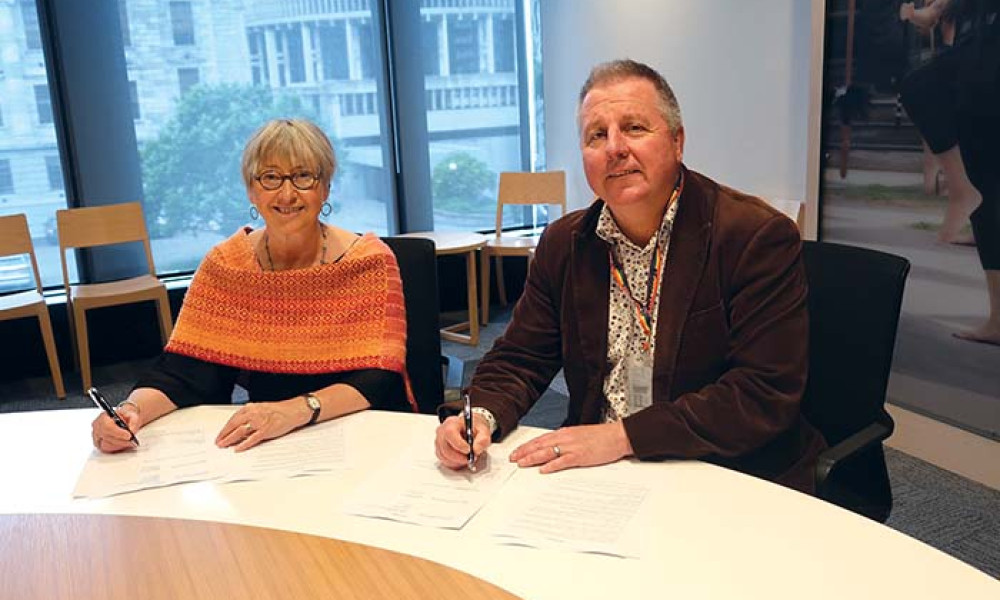
In November 2022, the PSA and the New Zealand Defence Force (NZDF) signed a worker participation agreement. The result of several years’ work, this was a big step forward for health and safety at NZDF. We talked with PSA Organiser Mark James about what a worker participation agreement is, and how it’s helping NZDF keep our members safe.
What is a worker participation agreement?
A worker participation agreement requires an organisation to engage with its workers and enable them to
participate in improving health and safety. Organisations must ask for and account for workers’ views on
health and safety. Workers must have clear and effective ways to suggest improvements or raise concerns.
Organisations and workers should work out solutions together.
PSA reps had been advocating for NZDF to improve its health and safety for several years. A memorandum
of understanding was not meeting workers’ needs, the NZDF was failing health and safety audits, specifically
on reporting and worker participation. This came to a head when we refused to sign off on NZDF’s accreditation.
To move forward, PSA reps worked with NZDF to develop a worker participation agreement. Under the agreement, both parties have committed to improving the health and safety of all civilian employees at NZDF. So, what does that look like in the workplace?
More strategic thinking
Before the participation agreement, NZDF was getting bogged down in long ‘to do’ lists. Now NZDF can take
a more high-level view and apply the three core strategies for a safe environment: culture, capability and
compliance.
Improved culture and capability
NZDF’s leadership is committed to leading a strong safety culture. This will help create an environment
where everyone feels responsible for their safety and the safety of others. It enables everyone to talk openly
about the safety challenges on the job.
Under the worker participation agreement, workers will be able to build their capabilities beyond basic training. They can gain the ability, skills, and aptitude to respond changing risks and hazards.
Better compliance
It’s a priority for every organisation to identify and control their top critical risks. The best way to achieve
this is through engaging the workers who are involved in the activities associated with these risks.
The NZDF Worker Participation Agreement helps make all its employees safer at work. This agreement enables health and safety matters, and hazard identification to not only be raised but to be addressed
and reported on up to the conclusion of the action that addresses the hazard in the workplace.

The PSA is constantly looking for opportunities to advocate for our members’ interests. We work with different people and organisations who share our goals to support strong public and community services and to create valued, safe and secure work where workers can have a voice and participate to make work and services better for all.
Public and Community Services Working Conditions Survey
In 2021, the PSA’s Public and Community Services Working Conditions Survey included new questions on caregiving, childcare arrangements, and unpaid work. Nearly 12,000 PSA members completed the Survey, we are really pleased the Ministry for Women have been able to use the data to better understand the contribution women, and in particular wāhine Māori, make through their unpaid and volunteer work.
Caregiving
Overall, 41% of PSA members had held caregiving responsibilities, either paid or unpaid, within the past year. The added pressures associated with care work highlights the importance of flexible working arrangements. In 2021 only a minority of caregivers had access to flexible work options, and women reported less access than men:
- 44% of male caregivers and 37% of female caregivers were able to take time off occasionally for special events involving their families.
- 34% of men and 26% of women were able to change their hours so they could regularly attend family-related activities.
- 6% of men and 6% of women were able to regularly work fewer hours, e.g., to move from full-time to part-time work.
- 31% of men and 23% of women were able to sometimes work longer or shorter hours to spend more time with family members when needed.
Childcare and education
When PSA members who used childcare during working hours were asked who travelled with their children to childcare, women were more likely to say “myself”, and men were more likely to say “my partner or other member of my household”.
The most common types of childcare used by PSA members were formal arrangements for preschoolers
(such as Early Childhood Education), and before- and after-school care arrangements for older children, such as those offered through schools or other formal providers.
Volunteer work
The Survey asked PSA members about their degree of involvement across a range of volunteer activities, differences noted were:
- Women were more likely to have regular involvement in healthcare or social support.
- Men were more likely to regularly spend time hunting or fishing, or looking after the natural environment.
- Both Pacific and Māori members were more likely than European members to volunteer in healthcare and social services.
As an outcome of this survey the Ministry for Women have been able to use this data to better understand
the contribution women and wāhine Māori, make through their unpaid and volunteer work.
Wellbeing of community support services during Covid-19
Recently we teamed up with Professor Katherine Ravenswood from AUT to highlight the issue of wellbeing for community support workers during the Covid-19 pandemic.
Community support workers who work for publicly funded community providers and NGOs often don’t enjoy decent working conditions. Many do not have guaranteed hours of work each week, they do not have paid rest breaks and often experience violence and harassment at work.
Professor Katherine Ravenswood and her team wanted to better understand the challenges of community support workers during the pandemic and the impacts it had on their health and social wellbeing. They used a “community-based participatory research approach”. This meant that PSA members who work in community support services interviewed other support workers and contributed directly to the information for a comprehensive analysis.
Among other things the report recommended that well-being centered employment and procurement practices must be adopted and community support work must be recognised and valued as complex. We will use this evidence to advocate for change to create decent work and better services in the community sector.
Professor Katherine Ravenswood also wrote an article about the importance of the disability support workforce. She says that in order to provide high quality individualised support for disabled people, and enable them to live good lives, requires the provision of decent working conditions, workforce planning and development. She concludes that support workers’ voices need to be included in the development and implementation of delivering disability support to ensure good lives for all. Our members have said this for a long time. Now they have evidence-based research backing them.
Evidence-based research helps inform decisions, it fills our basket of knowledge and enables us to speak to the issues that matter with data to strengthen our case to continue to advocate for community support workers. We encourage all members to take part in these surveys in the future.

Key objectives
One of the key objectives of the Better Later Life He Oranga Kaumātua strategy (2019-2034) is that older workers are treated fairly and that older people can work and those who can’t are supported. To achieve this objective the strategy suggests employers consider and respond to challenges and opportunities of an increasingly older workforce. It is also highlighted that workplaces provide flexible work environments and learning and development opportunities for older workers.
In order to make genuine progress on enabling older people in New Zealand to lead valued, connected and fulfilling lives, changes in the workplace are required.
Observations in the workplace
As our member Lucia Rogers observes in her day to day interactions with older workers: “in many cases older members chose to continue to work because it provides them with a purpose and a path to work with clients that leads to positive outcomes. Regrettably older members are sometimes, underhandedly, bullied.”
She continues to say that ageist remarks often come as “remarks that are not direct or overt but are raised via thinly veiled digs about age. “At first relationships seem good and input declared as helpful and much appreciated. However, often there is the hidden perception that advancing age is synonymous with the older worker not being up to the job.”
In addition, gender pay gaps increase with age. Salaries for women over 50 years old decrease compared with men’s salaries which continue to increase. This can lead to older women’s lack of financial security and challenges to actively participate in our communities.
PSA creating change
The PSA plays an important role to create change with older workers in our public and community services.
The current situation shows that collectively we need to stand up for workplaces free from bias and discrimination and for work that is valued, secure and influenced by strong worker voice – including the voices of older people – to create wellbeing for all workers.
We need to respect and value the experience and knowledge accumulated over the life cycle as a precious contribution to our work culture and our service to the public. After all, changing our perception of older people at work now will change how all of us are seen in the future – and how we will lead valued, connected and fulfilling working lives when we are older.

“I’m no longer accepting the things I can’t change. I am changing the things I cannot accept” – Angela Davis.
Kia Toipoto was launched in November 2021, with the following goals:
- substantially reduce gender, Māori, Pacific, and ethnic pay gaps
- accelerate progress for wāhine Māori, Pacific women, and women from ethnic communities
- create fairer workplaces for all, including disabled people and members of rainbow communities.
Under Kia Toipoto, agencies and Crown entities publish annual plans reporting their gender and ethnic pay gaps and outlining the actions they are taking to address those pay gaps.
Kia Toipoto is the name gifted to us by Piripi Winiata. It comes from the saying “Waiho i te toipoto, kaua i te
toiroa l let us be united, not wide apart.” The name speaks to closinggaps and creating unity and fairness for all peoples.
Te Whakapiri is the working group that overseas Kia Toipoto. It is co-chaired by PSA Te Rūnanga o Ngā Toa Āwhina and Te Kawa Mataaho, and includes representatives from the PSA, population agencies and employee-led networks. These voices are the foundation of Kia Toipoto. The name Te Whakapiri was also gifted to us by Piripi Winiata. It comes from the saying “he ora te whakapiri, he mate te whakatakariri” or "there is strength in unity, defeat in anger.”
Having established Kia Toipoto over the course of 2022, we are now focusing on accelerating gains for Māori, Pacific, and ethnic communities. Te Whakapiri works closely with agencies and Crown entities to meet the Kia Toipoto milestones and provide ongoing support and advice. The guidance we’ve published in the last year includes:
- ensuring bias does not influence starting salaries
- career progression, breaks and leave
- improving workforce and leadership representation, so that the Public Service overall becomes more representative of society.
We hold regular workshops for agencies, entities and union representatives on how to implement our guidance. All our guidance is on our Kia Toipoto webpage.
This work has contributed to substantial decreases in the pay gaps in the public service. The gender pay gap fell from 12.2% in 2018, to 7.7% in 2022. The Māori pay gap also fell substantially from 11.2% in 2018 to 6.5% in 2022. There is more work needed to reduce the Pacific pay gap.
How can PSA members get involved in Kia Toipoto? Read your Kia Toipoto action plan for your organisation and ask questions about it – action plans are available at the website below. Ask your delegate, organiser, or HR team how you can get involved with developing the next plan – there is an expectation that plans are based on engagement with employees and unions.
Naku noa na Te Pūkenga Here Tikanga Mahi (PSA) & Task Force (Te Kawa Mataaho).
Visit the Kia Toipoto website for guidance and action plans

Activists Meri Te Tai Mangakāhia, and Hana Te Hemara were the driving force behind the Māori language petition that led to the revitalisation of te reo in Aotearoa.
This article draws a link between those first pioneers and their work to restore te reo across Aotearoa, and ways that now links to the union movement itself.

Meri Te Tai Mangakāhia
Many of us walk in the footsteps of wāhine toa who have paved the way for more than 100 years.
Meri Te Tai Mangakāhia was one of the first. Meri stood before Parliament in 1893 submitting a motion in favour of Māori women being allowed to vote for, and stand as, members of Parliament.
Pākehā suffragists were focused on moral reform and temperance (restriction of alcohol) along with the right to vote. Wāhine Māori, along with the right to vote, were also concerned about the overall wellbeing of Māori culture, the need to counter the effects of colonisation, and the lack of recognition of Māori women’s rights as the owners of land and resources.
In 1893 all New Zealand women, Māori and Pakeha, won the right to vote in general elections. It is not known how many Māori women signed the suffrage petition, but perhaps around 4000 of them voted in the 1893 election.
Mere is not mentioned that often on Suffrage Day or recognised alongside Kate Shepard, but we honour you Mere Te Tai Mangakāhia, e whakahonoretia ana koe e mātau i tēnei rā, ko Mere Te Tai Mangakāhia for your work in getting Māori women the right to vote.
Hana Te Hemara

Fifty years ago, in wet and bitterly cold weather, Hana Te Hemara and an army of elders and activists marched on parliament to deliver the Māori language petition. The 1972 petition was signed by 33,000 Māori and Pākehā. It called for the introduction of Māori language and culture curriculum in schools nationwide.
Delivered on September 14, this day was later to become Māori language day and subsequently the centrepiece of te wiki o te reo Māori.
We honour Hana E whakahonoretia ana koe e mātau i tēnei rā, Ko Hana Te Hemara.
Hana said “Aotearoa has changed because so many of us fought to change it.
“What’s good for Māori workers is good for all workers. If we sort out the social issues for our people, it will benefit all of Aotearoa. The struggle continues.”
Te Tiriti o Waitangi obligations are the foundation for achieving partnership, aspirations and equitable outcomes for whānau, hapu, Iwi.
For our Pasefika and ethnic whānau, partnership as intended by Te Tiriti promotes inclusive practice, a culture of equality, opportunity, and achievement for all people.
With the acknowledgement of the 50-year milestone we continue to work together. As Te Tiriti partners, we work to promote positive outcomes and measures for Māori, Pasefika, and all other ethnic groups.
As unionists, Kia Toipoto moves us into another critical phase. Bias, discrimination, and racism are major contributors to gender and ethnic pay gaps. It will require a strong commitment from us all to work collectively to identify, address and eliminate all barriers within our workplaces.
We can dream and imagine what our future could look like for women, wāhine Māori, Pasefika, and ethnic communities through the implementation of Kia Toipoto and Te Orowaru.
We’ve heard the karanga (the call), the voices and stories of women, wāhine toa and our tūpuna wāhine, it is now up to all of us to continue the work for an equitable Aotearoa.
For more on kia toipoto and te orowaru, read our ethnic pay gap story.
Kia kaha, Kia maia, Kia Manawanui. Te Hei Mauri ora!
You have an extensive history with the PSA, how did you come to be a delegate/President?
I started my working career with DSER straight out of school. I quickly wanted to take on new opportunities, so became a delegate. Reforms in the science sector saw me becoming more involved and with the introduction of the Science Committee it was a real opportunity to have a seat at the table when decisions were being made.
What was some of the highlights of being a delegate/president?
Getting to interact with other delegates from all sorts of different workplaces and jobs, each facing different issues. It’s humbling. It makes you realise sometimes that you can help make a real difference for those people by supporting them in their cause.
You have been an active member throughout successive changes in government, what lessons have you learned?
Don’t assume it’s not going to happen to you. It’s not just those who work as public servants but for every one of us who accesses public services. We all need to be thinking about the bigger picture when it comes to voting. Don’t be taken in by the promises of tax cuts and quick fixes. Any role funded by the Government is affected. It might not happen to you directly (a job loss) but tax cuts and savings have to come from somewhere. That means reductions in services and that’s something we all suffer for.
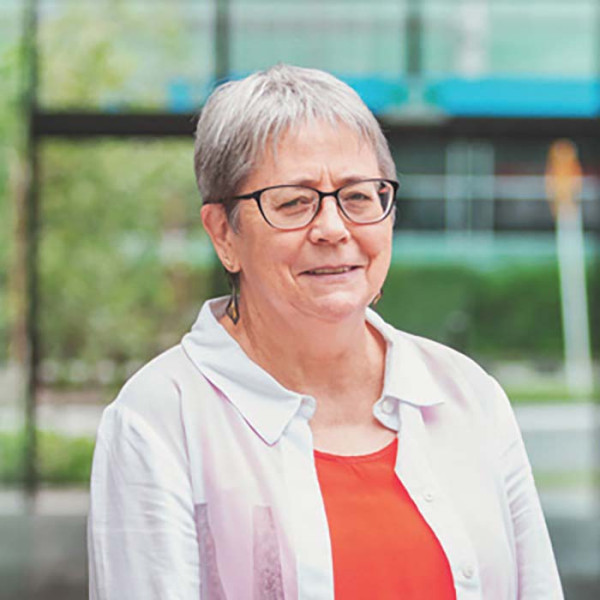
What’s something about your time as president that you would like to share with members?
PSA has always had a strong mentality of being politically neutral and it does this well. For a member looking at it from the outside, it can be frustrating, and leave some asking why things aren’t done faster. But it’s done for a reason. It enables us to manage our agenda and be strategic about when we fight for the things we want to achieve. As members you might not see things happening quickly, but it is being done for a reason.
What’s your advice to someone thinking of becoming a delegate?
Being a delegate is what you make of it. You can have as much or as little involvement as you want. It can present all sorts of opportunities and whether they are good or bad, you learn something just by being involved.

Jenny Goodman
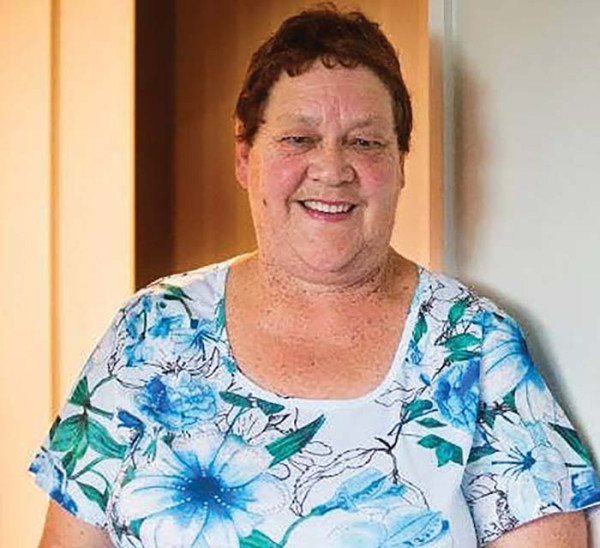
Nominated by the Community Public Service Sector Committee.
Jenny has demonstrated hard work, commitment, and dedication as a workplace delegate, national delegate, elected convenor of the Community Public Service Sector Committee and a member of the PSA Executive Board.
A home support worker and member of the PSA and a delegate for Healthcare NZ Christchurch since 2003, Jenny was instrumental in the formation of the Community Public Service sector committee, alongside Vince Denise who has since sadly passed away.
Jenny was elected as convenor for the Community Public Service Sector Committee in 2012, and also served
as an active Executive Board member during this time.
A strong advocate for disability and home-based community support workers, Jenny was a strong advocate in the Up Where We Belong campaign which led to the historic sleepover settlement, payment for in-between travel and the guaranteed hours settlements for support workers.
Her contributions have been union-wide and her impact nation-wide for those in the sector. Her leadership has produced significant gains for members in the industrial, economic, political and social fields during her
time in the PSA.
When we spoke to Jenny about what this award meant to her, she said “it was such privilege to win this award. I see this as recognition within the union for the Community Public Service as well as the work we’ve done to organise members within it. I’ve watched the sector grow from the ground up. Our work continues and I want to pay tribute to everyone who has built the sector to the point we are now and will continue to work with us in the future.”
Janet Quigley

Nominated by the District Health Board (DHB) Sector Committee.
Janet has a long and prolific history as a union delegate. She joined the PSA in 1970 and has been a catalyst for change ever since.
She has held a number of important positions within the union – including co-convenor of the DHB Sector Committee, Executive Board member, vice president and president – throughout her 52 year career. Janet currently works as a Health Protection Offices for Te Whatu Ora, Waitaha Canterbury.
Janet is a strong advocate for the rights of women in the workplace. She has championed efforts to reignite the PSA Women’s Network, and has provided consistent support for women in a number of key governance positions within Public Services International (the global union which PSA and other community and public service unions belong to as part of the international union movement.)
Janet has been a role model and mentor for many generations of women within the PSA. She’s a trailblazer, who has carved out a path for women to follow; inspiring them to reach higher in their union endeavours.
Janet said “it is such an unexpected honour for me to be made a life member of PSA Te Pūkenga Here Tikanga Mahi. For me working alongside likeminded people who care about equity, social justice and workers’ rights and who are prepared to stand up for what is right has been a real privilege.
“Nothing I’ve done or achieved has been done by me alone so in accepting this honour I did so on behalf of all my union brothers and sisters who have stood beside me over these years.
“We are a great union of which I’m proud to be a part of.”
Congratulations to both Jenny and Janet. We are sure that your contributions to the PSA will continue to benefit members for many more years to come.

It is important that concerns about a chilling effect on the rights of public servants are placed in context so that the rights and entitlements that public servants presently enjoy and share with other New Zealanders can be properly acknowledged and duly upheld.
Firstly, Rob Campbell’s role as Chair of Te Whatu Ora is different to the majority of public service roles – given not only the seniority of his position and regular, direct contact with Ministers of the Crown, but also the express application of the code of conduct for crown entity board members under which he operated as the Chair of Te Whatu Ora.
Any commentators, much less public service managers, who might view Rob Campbell’s sacking as somehow setting a precedent for all public servants are not only mistaken but guilty of misreading the standards that do properly apply to public servants when engaging in public debate.
The Public Service Act 2020 expressly provides that public servants have all the rights and freedoms affirmed in the New Zealand Bill of Rights Act which, of course, in turn also confirms both the right to freedom of expression and freedom of association. While the Public Service Commissioner may set “Standards of Integrity and Conduct” for both the public service and Crown entities which seek to enshrine the principle of political neutrality, at the same time guidance documents under the Commissioner’s own hand properly confirm that “public servants have the same rights to freedom of expression and political activity in their private lives as other New Zealanders”.
So, in this context what does “political neutrality” actually look like? Or, to put it another way, how do we reconcile the Public Service Act’s principle of acting in a politically neutral manner with the public servants’ right to freedom of expression and engagement in political activity?
An important guide in this regard are the rights conferred under the Electoral Act, which enable public servants to stand as a candidate for election as a member of Parliament. Under this Act, public servants have a statutory right to take an active part in all aspects of a general election including the policy attacks and occasional mud-slinging at political opponents this may entail – and to return to their job after the election if they are not elected.
This strongly suggests that any demands for political neutrality that might be made by public service bosses following the Rob Campbell saga can only properly apply to public servants’ activities within the workplace and during work time, or potentially to a very small number of senior public servants in comparable roles to that previously undertaken by Rob Campbell. Outside of that context, and as a general rule, public servants should be free to take part in all lawful and reasonable forms of political activity and discourse without fear of repercussion for alleged breach of political neutrality, provided they do so as a private citizen and not as a representative of their workplace.
For the sake of completeness, it should be noted that an employer might still seek to raise concerns relating to a member’s actions outside the workplace on other grounds, for example “breach of organisational values” or “bringing the employer into disrepute”. Therefore, individual members still need to exercise due care and, if in doubt, seek advice or assistance from their organiser.
Jock Lawrie
PSA Legal Officer
2 March 2023
Got a question? Get in touch with one of our PSA team members today:
PSA House, 11 Aurora Terrace
Wellington, New Zealand.
PO Box 3817,
Wellington 6140

