

National Secretaries Fleur Fitzsimons and Duane Leo outline the PSA’s fight against cuts to public and community services.
It was part horror – “we are going to sack 9,000 workers” – and part science-fiction-fantasy – “all their work will be done by AI”.
The storyteller was finance minister Nicola Willis in her pre-Budget announcement on 19 May. Behind the Government’s storytelling were two brutal truths: the livelihoods of thousands of New Zealand workers are at risk, and the services they deliver for New Zealanders will be slashed.
THE BIG AI LIE
Despite what the Government says, AI won’t be able to replace the mahi of thousands of dedicated workers with no impact on services. As countless of experts have told the Government, AI should be a tool workers can use, not an excuse to replace them.
Sacking 9,000 workers and hoping AI fills the gap is a gamble with the services New Zealanders depend on. No country in the world has evidence that AI can replace public service workers at the scale this Government is betting on.
SERVICES ALREADY UNDER PRESSURE
The last round of Government cuts is already having an ongoing impact on the lives of workers and the services they deliver. Job losses have shredded workers’ self-confidence, sapped their hope for a better future and heaped financial pressure on their whānau. The cuts have forced many workers to seek a better life overseas.
Those still with jobs face the impossible task of having to do more with less. A survey of PSA members conducted in March paints a clear picture of the devastating effects of the Government’s cuts to date.
The survey found that three out of four public service workers say the Government is not providing sufficient funding to enable public and community services to do a good job. A similar number of respondents said that the two years of restructuring has not helped them deliver better services to New Zealanders. Just five per cent of those surveyed thought restructuring had made things better.
Over half of workers surveyed said their agency’s ability to deliver has worsened in the last year. Corners are being cut. Institutional knowledge is walking out the door. Only the bare minimum is able to be done.
Workers describe teams running on fumes, morale plummeting, and sickness increasing from burnout. One worker said their agency had abandoned quality in favour of quantity and was operating “more like a fast-food restaurant than a government department”.
Another despaired at the loss of support staff, saying “having managers and leaders coordinate meeting rooms, travel bookings and other admin tasks is not effective or efficient”.
As well as running down public services and the state sector, the cuts are having knock-on effects across community and public services, health, and local government – impacting schools, hospitals, Māori and rural communities.
HOW WE WILL FIGHT BACK
We must continue to take the fight to the Government. We will defend every job and to retain all existing member terms and conditions. We will keep pushing back on the Coalition Government’s constant attacks on te Tiriti o Waitangi and its attempts to strip te reo and tikanga Māori from public services. We will keep opposing the Government’s attempts to roll back the fundamental rights of working New Zealanders, such as reducing sick leave and holiday pay, and a proper health and safety system.
To make the political cost of the Government’s policies as high as possible, we will keep taking a multi-layered approach to fight for the jobs and rights of our members. We will keep organising in workplaces, campaigning in communities, lobbying ministers, politicians and officials in the halls of power, and taking legal action in the courts.
We will use the news media and social media to highlight the importance of the work members do for New Zealanders, the impacts of job cuts and the loss of workers’ rights.
In all workplaces facing job losses, members and delegates will keep defending jobs, writing comprehensive submissions opposing change proposals and offering ongoing support for workers.
We will also keep enforcing the provisions of collective agreements that ensure that restructures are carried out in a way that upholds respect and dignity for workers, and so that workers are not seen as merely “human capital”.
WE HAVE HAD SOME WINS
While we have not saved every job, we have had successes. Our media and social media campaigns have raised the profile of the issues facing members.
In the courts, we have successfully challenged change proposals started by Fire and Emergency NZ, Te Puni Kōkiri, the Ministry of Education and Te Whatu Ora Health New Zealand. The legal action against Te Whatu Ora saw change proposals in three directorates stopped, and 200 jobs retained in digital services and Pacific health teams. Hundreds of jobs were also kept because of the detailed submissions informed by PSA member on-the-job experience.
Legal action also forced the Ministry of Business Innovation and Employment and the Accident Compensation Corporation to drop plans to restrict flexible working arrangements.
CHANGING THE GOVERNMENT
The general election on November 7 offers an opportunity to change the way workers are treated – by changing the Government.
This year we will be unapologetically campaigning to Change the Government. After three years of attacks on our jobs and the services we provide, the times demand nothing less. The Coalition Government parties are campaigning on further denigrating the work of public service workers and cutting public service and state sector jobs.
The Government made an early choice to fund tax cuts for landlords, tax breaks for business and handouts for the tobacco industry. It has paid for these reckless spending decisions over its past three Budgets by cutting the jobs of thousands of members in the public service and state sector and by denying more than 150,000 undervalued mostly-women workers the pay rise they deserve, by gutting our pay equity laws.
Over the past three years the Coalition has introduced a raft of anti-worker legislation that is making fire at will a reality for workers, reducing health and safety, decreasing entitlements to annual and sick leave for many workers, and reversing the progress as a nation we have made over the last 40 years in recognising and giving mana to te Tiriti o Waitangi.
The most effective thing you can do to resist the Government’s job losses is to be part of the PSA election campaign.
The Coalition Government’s plans to make 9,000 public servants redundant in the next three years, after more than 4,000 have already been cut, reinforces the need for our election campaign to focus squarely on changing the Government.
This year’s election campaign is a battle to save the jobs of thousands of members and the services they deliver that New Zealanders rely on. It’s also a battle to ensure a new government:
• Ensures public and community services, science, and local government are all adequately funded – not starved of resources to pay for unaffordable tax cuts for landlords and businesses.
• Passes legislation which settles and fully funds the care and support pay equity claim within the first 100 days, restore a legal framework that ensures New Zealand women have pay equity, and commit to the settlement of the 33 cancelled pay equity claims.
• Reverses the attacks on workers’ rights and health and safety protections implemented or planned by the previous government, including cuts to sick and annual leave which cut the pay of many workers and others, and the personal grievance law that allows employers to fire workers at will.
• Funds the public health system properly so it has the health workforce to meet New Zealanders’ needs and the investment required to cover the rising costs of medical technology and abandon all moves to privatisation.
• Properly honours Te Tiriti o Waitangi and one that commits to winding back this government's shameful attacks on the reo and tikanga Māori, and the cuts to Māori capability across public services.
• Ensures AI is introduced in a way that makes public service workers more productive and is not used to simply cut roles.
MEETING THE MOMENT
New Zealanders want a government that has their best interests at the heart of every political decision. But the Coalition has shown how prioritising landlords, multinational corporations and the tobacco industry over workers can lead to a rapid drop in living standards across the country.
HOW YOU CAN GET INVOLVED
We will change the Government by leading the debate, equipping delegates and activating members.
The PSA policy team is working on a suite of reports and events for release through to November. These reports include analyses on how the Government’s reckless cuts harm workers, health and other services, the community and the economy.
Each report release will have an associated launch event either online via webinars, or through hybrid in-person and online events. These events will be an opportunity to learn more about the pressing issues we are facing as workers.
We will also host activations, events and debates across the motu. From candidate debates in South Auckland to Pay Equity conversations in Invercargill, we will reach tens of thousands of voters with our message of change.
The PSA website will be your one-stop shop for information on your rights at work, how to participate in the election following changes to the Electoral Act, and promotional materials for election campaign events.
POSTCARDS FOR CHANGE
One of the first mass activations is the distribution of Change the Government postcards to workers across the motu. These directly hold the Prime Minister to account for his leadership and destructive agenda across the past three years.
Use these to spark a conversation with friends and whānau about the importance of the November election – for example, take a walk to the letterbox where you will be voting.
CAMPAIGNING FOR CHANGE
The PSA is not affiliated to any political party – we are an independent trade union advocating for policies our members determine.
We have and will continue to work with Ministers and chief executives to seek improvements to policies, just as we have worked with opposition parties to influence the policies they will present to voters at this election. We will not be telling members which parties they should support. But we are advocating for a clear outcome: that the next Government is made up of parties that will support properly funded public services, restore pay equity and improve worker rights.
We are also mindful of the requirements on public servants to be politically neutral at work and we will not be asking members to compromise those requirements.
Our call to change the Government is not without precedent. We took a similar position before the 1999 General Election, which ended nine years of an anti-worker, National-led government.
We are clear that we have a responsibility to use our expertise as a collective of 96,000 workers to ensure New Zealanders hear our unique perspective this election and that the Government’s destructive agenda must end.
Vote this election to Change the Government to put people, planet and public services first!
CHANGES TO THE ELECTORAL ACT
Last year, the coalition Government amended the Electoral Act to make it less accessible for New Zealanders to participate in democracy. They:
- Shortened the enrolment period to 13 days before election day, to allow time for the Electoral Commission to complete enrolment processing before election day.
- Reinstated a voting disqualification for people in prison sentenced to less than three years for offences committed after the Bill takes effect, which extends the current ban for people in prison sentenced to more than three years.
- Set in law an advance voting period of 12 calendar days before election day.
- Created a new offence to prohibit the provision of free food, drink or entertainment within 100m of the entrance of a voting place while voting is taking place.
Make sure you’re across these changes as you prepare to vote this year.
KEY ELECTION DATES
• 6 August: Last day for Māori who are already enrolled to change rolls.
• 7 September: Candidate nominations open.
• 4 October: Writ Day. The Governor-General issues formal direction to the Electoral Commission to hold the election. Anyone who enrols after this date casts a special vote.
• 21 October: Overseas voting starts.
• 25 October: Last day to enrol to vote in the election.
• 26 October: Advance voting starts.
• 6 November: Regulated period ends. All election advertising must end. Signs must be taken down by midnight.
• 7 November: Election Day. Voting places open from 9:00am to 7:00pm. Preliminary election results released progressively from 7:00pm on electionresults.govt.nz.
• 27 November: Official results for the 2026 General Election declared.
FIGHTING THE GOVERNMENT’S PLAN TO DESTROY PUBLIC SERVICES
In May, the finance minister laid out a plan to devastate the public service by merging departments, replacing workers with untested AI, and setting a target of dismissing almost 9,000 public service workers by 2029.
We immediately responded to show the Government that we are standing against this serious threat to job security and the services all New Zealanders rely on.
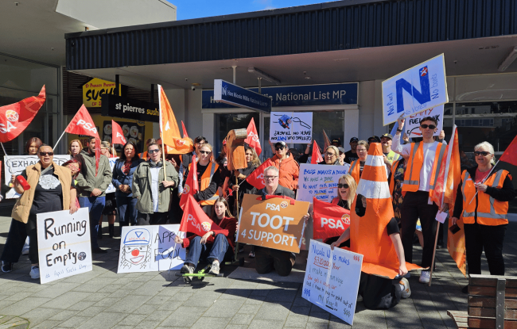
The following weekend, more than 1,000 people rallied in Wellington against the Government’s callous cuts to public services and the people who deliver them.
Union delegates and officials, allies, and Opposition politicians all spoke against the plan with one voice: this government doesn’t get to define your worth. They don’t get to make reckless cuts to our public services without our say.
We’ll continue to fight this destructive and deeply harmful attack and get the truth of this plan out to the public.
WE WILL NOT STAND FOR POOR PAY OFFERS
In this election year, facing a hostile government, bargaining is becoming more difficult and it seems likely that we will need to resort to more industrial action.
We say this in July, after 1,300 PSA members working at the Department of Internal Affairs (DIA), the National Emergency Management Agency (NEMA) and the Ministry for Ethnic Communities (MEC) walked off the job to support their claim for a pay offer that keeps pace with the cost of living.
Members at DIA, NEMA, and MEC were facing a miserable offer which included an average pay increase of 0.8%. We know that members across our membership are facing similarly bad offers.
We do not take strike action lightly. No matter where we work, we all care about the services we deliver. But we deserve to be paid fairly for our work as well. Strikes are a clear line in the sand that says we will not accept offers that will leave us worse off.
Employers argue that their budgets are tight – we say that it isn’t our responsibility to pay for this Government’s decision to waste money on handouts for landlords and tobacco companies.
MBIE has just held stop-work meetings to consider industrial action, and industrial action may be needed at other agencies too. We will need our strength and solidarity for the coming months.
FORMAL COMPLAINT TAKEN TO UNITED NATIONS OVER GUTTING OF PAY EQUITY
A formal complaint has been lodged with the United Nations asking them to investigate whether the Government's changes to pay equity laws amount to systemic discrimination against women.
Last year the Government cancelled claims that covered more than 180,000 workers – the vast majority, women – across care and support work, disability support, education, health and community and public services.
The complaint to the UN, brought by the Pay Equity Coalition Aotearoa (PECA) – which comprises of 20 organisations, including the PSA – highlighted with concern that the changes particularly disadvantage wāhine Māori, Pasifika women, migrant women, disabled women, and older women workers, many of whom dominate the critically important workforces of health, care and support and education.
Dame Judy McGregor, spokesperson for PECA, said:
“These are roles that have been chronically undervalued for decades. A year on, workers are no closer to justice. The law change has created a system that is much harder to access or work with – one where the thresholds and controls now make it extremely difficult for claims to proceed.”
The United Nations will assess whether the complaint is admissible. If the complaint is accepted, it will be sent to the New Zealand Government for a response.
PSA SUPPORTS CLIMATE ACTION ON NELSON LONG-TERM PLAN
Nelson City Council has reinstated climate change and the environment as one of the draft strategic priorities for the region’s Long-Term Plan after strong community action opposing it.
The strategic priorities are significant within the Long-Term Plan because they provide critical guidance to staff about where to increase or decrease resourcing and activity. It will also guide senior leadership through the ongoing restructures at Nelson City Council.
Over 40 people, including PSA members, rallied outside council offices on 7 May to demand the council put the environment front and centre.
City councillors also received hundreds of emails urging them to reconsider.
PSA organiser Sarah Proctor-Thomson said the demonstration was an awesome example of democracy in action.
“There was a real mix of ages at the demonstration, including young people.
“It was amazing for them to see that their action had led to a change in decision from the council.”
HOME SUPPORT WORKERS WIN MILEAGE RATE INCREASE, BUT IT STILL FALLS SHORT
Sustained campaigning by home support workers saw them win a 30% increase to their mileage rate to 82.5 cents per kilometre, on 2 April, while petrol prices were skyrocketing.
While this win was a positive step, it still falls short of what is needed and is only temporary. The rate will reduce again once petrol drops below $3 per litre for four consecutive weeks, or 31 March 2027 – whichever comes first.
Around 23,000 home support workers care for our elderly and people with injuries, illness and disabilities, helping them live independently in their own homes. They are among the lowest-paid workers in the country, had their pay equity claims cancelled, and are the only publicly funded workers required to supply and maintain a car as a condition of their employment.
Home support workers need the costs they incur to do their job to be properly covered.
In May, the PSA and E tū filed a submission with the Ministry of Health, calling for the mileage rate to be increased permanently to $1.17/km in line with the IRD rate. Or, failing this, the funders should fund and require employers to provide each worker with a car for work use, cover the cost of maintenance, servicing, registration and warrants of fitness, and reimburse all actual fuel costs from use for work purposes.
At the time of publishing, there has been no update from the Ministry of Health. The PSA’s home support workers will continue to fight for fair pay and conditions.
Te Mahinga Ora sat down with Janet Stokes, tutor co-lead at Ko Taku Reo Deaf Education NZ, to learn more about her role and her pioneering mahi translating the Specialist Residential Schools’ collective agreement into New Zealand Sign Language (NZSL).
Ko Taku Reo is New Zealand’s national Deaf education service, providing both residential schooling options and individual tutoring for Deaf tamariki who go to mainstream schools.
That’s where Janet Stokes and her team come in. As a tutor co-lead based in Christchurch, Janet travels across the South Island to work with Deaf students, their classes and whānau.
The tutoring is as much about improving sign skills as it is about exploring Deaf culture and becoming a confident communicator in whatever language a student chooses.
Janet also supports and coordinates a team of tutors who work in Christchurch, Dunedin, and Invercargill.
On top of her busy day job, Janet has been a PSA delegate for nearly 20 years.
“The delegate at the time noticed that I was a strong advocate and was always asking the hard questions,” she said.
NO LEG TO STAND ON IN THOSE DAYS
Janet’s path into teaching NZSL was far from easy. She went into education training straight after school, studying the Primary Diploma of Teaching in Wellington.
“I did this for two years, and then actually failed my second-year music course. The Wellington College of Education at the time refused to allow me into the third unless I passed music,” Janet said.
“I am fully Deaf and cannot hear at all, and this was all prior to the Human Rights Act legislation so I had no leg to stand on at the time.
“I ended up finishing my Bachelor of Arts Degree (Major in Education) at Victoria University over the next two years.
“At the time, those subjects were compulsory and there was no flexibility or access to NZSL interpreters for me. I had to find the funding for one interpreter for a couple of my lectures at university – the rest of the time I had to survive on reading material only.”
After study, Janet took up a post as a language assistant at Van Asch Deaf Education Centre (which has since merged with Kelson Deaf Education Centre into Ko Taku Reo).
A HUGE MILESTONE FOR US
Janet first started advocating for the Specialist Residential Schools’ collective agreement to be translated into NZSL in 2022.
Fluent in both English and NZSL, Janet found that one of her primary tasks was interpreting the collective agreement for staff whose first language was NZSL.
“That was when we had very few Deaf staff here.
“Eventually over time, more Deaf staff became members, and many of them struggled to understand the collective so I was spending a lot of my time translating for them as issues arose.
“I advocated in bargaining for it to be fully translated because we had an obligation to make sure that the collective, a legal document, is accessible for those members.”
Janet says there was a huge positive reaction to the collective agreement being made available in NZSL.
“Over half of our members are Deaf and to have this accessible is groundbreaking.
“It is only because I am the first Deaf person in New Zealand on a bargaining team that this has happened.
“There is no other collective agreement by any other union here or worldwide that is fully translated into a sign language, and I am proud of that.”
Content note: This article mentions family violence and sexual violence.
In May, Birthright Hutt Valley closed its doors. After 60 years of supporting solo parents and their tamariki through hardship, family violence, housing crisis and poverty, it simply ran out of money. The Oranga Tamariki funding that kept it afloat had not increased since 2023, while operational costs kept rising and competition for philanthropic grants intensified. The funding gap proved impossible to close.
Birthright was the only specialist social service for single-caregiver whānau in the Hutt Valley. Its social workers helped families navigate WINZ, supported survivors of family violence, advocated in the Family Court and provided practical help through the Whānau Room. In the weeks after the closure was announced, whānau visited the Birthright office to ask where they could turn next. The staff had no answers for them.
“OUR WHĀNAU HAVE NOWHERE ELSE TO GO”
On the day of closure, PSA member, Sarah Szabo, said:
“The team is all devastated. My heart, personally, is hurting for the whānau we’ve supported over 60 years. We’re going to leave a huge hole in our community and our whānau have nowhere else to go. There are no other services in the Hutt Valley like Birthright.”
Now, another closure is coming.
RespectEd Aotearoa, Wellington’s specialist sexual violence prevention organisation, will shut in August. It was established in 2015 by Wellington Rape Crisis, WellStop and the Wellington Sexual Abuse HELP Foundation to address a recognised gap in prevention services. For a decade, it has delivered education in schools, workplaces, prisons and communities. Hikitia!, ACC’s flagship, community-led programme, was halted in May 2025, cutting off funding RespectEd had been relying on. A programme RespectEd delivered for wāhine Māori on remand in prisons was also cut by Corrections in 2025.
Since then, the organisation has pursued every available option to stay afloat, but it has now exhausted its reserves.
WIDESPREAD CONCERN IN THE COMMUNITY
PSA member Juliet Leeming, a social worker at RespectEd, is upset about the upcoming closure:
“It makes me sad to think that we will not be able to carry on with some of the programmes we do. For instance, one of my favourites is ‘Friends Whānau Flirting’. It's a programme with intellectually disabled people in Wellington, in the high schools, and it's a programme that has been one of my favourites to deliver. We're working with really amazing students who are learning skills that will help keep them safe.
“We know that disabled people are at really high levels of risk for being victims of sexual violence. This programme gives skills and tools to students who can then understand what a healthy relationship is, what is acceptable and what behaviours are not acceptable.”
There is widespread concern about the loss of an organisation like RespectEd, and what it signals for the future of sexual violence prevention and community public services in New Zealand. An open letter was signed by concerned organisations, calling on the Government to fund RespectEd and sexual violence prevention more broadly. It is now open for public signing: Fund Sexual Violence Prevention - Together.
ONLY THE TIP OF THE ICEBERG
These two closures are not isolated. They are the visible edge of a much wider squeeze on the community public services sector. Across the country, small organisations that hold communities together are facing the same pressures – flat or falling government contracts, rising costs and a philanthropic sector that cannot absorb the overflow. Government cuts have forced more organisations to compete for a shrinking pool of philanthropic grants, effectively starving the sector.
The Government’s answer is the Social Investment Fund. However, in 2025, analysis from Hui E! Community Aotearoa found the $47.5 million annual amount was less than the decrease in funding to the sector. Of the 187 organisations that applied for funding in the first round, only seven were successful.
Additionally, to access the fund, organisations must report on their work in far more detail than before – complex, skilled work that smaller providers don’t have the capacity to take on without diverting resources. Small specialist organisations like Birthright and RespectEd – doing relationship-based work, deeply embedded in communities – simply can’t compete with the large service providers.
THE COST OF PREVENTABLE HARM
PSA members work in and alongside these organisations and understand what is lost when these vital services close. Families are turned away, and harm that could have been prevented shows up somewhere more devastating, and more expensive than what it’d cost to prevent it – in a hospital, in a prison or in a crisis call at 3am.
PSA National Secretary, Fleur Fitzsimons, said:
“Without a change of course, Birthright Hutt Valley and RespectEd Aotearoa will not be the last to fall. The blame for this, and the consequences of collapsing services and rising harm, sits squarely on this Government’s shoulders.”
The Government’s inability to rein in the cost of living is biting, our survey of members for 2026 shows. More than 7,600 members responded to the survey.
Seventy per cent of members are finding it harder to afford basic necessities such as food, housing and utilities. Five per cent of members – the equivalent of 3,000 workers –say they have to rely on foodbanks. Māori, Pacific and Indian workers were more likely to struggle to afford the basics.
HUGE PRESSURE ON MEMBERS
The cost-of-living crisis has been cumulative and shows no sign of letting up. Inflation for the year to December 2025 was running at 3.1% and rose another 0.9% in the first quarter of 2026.
These increases have put huge pressure on members. Almost half of members said that they felt less financially secure than they did six months ago. Two thirds of members said that the rising cost of living has negatively impacted their mental wellbeing.
WHAT MEMBERS ARE BEING PAID
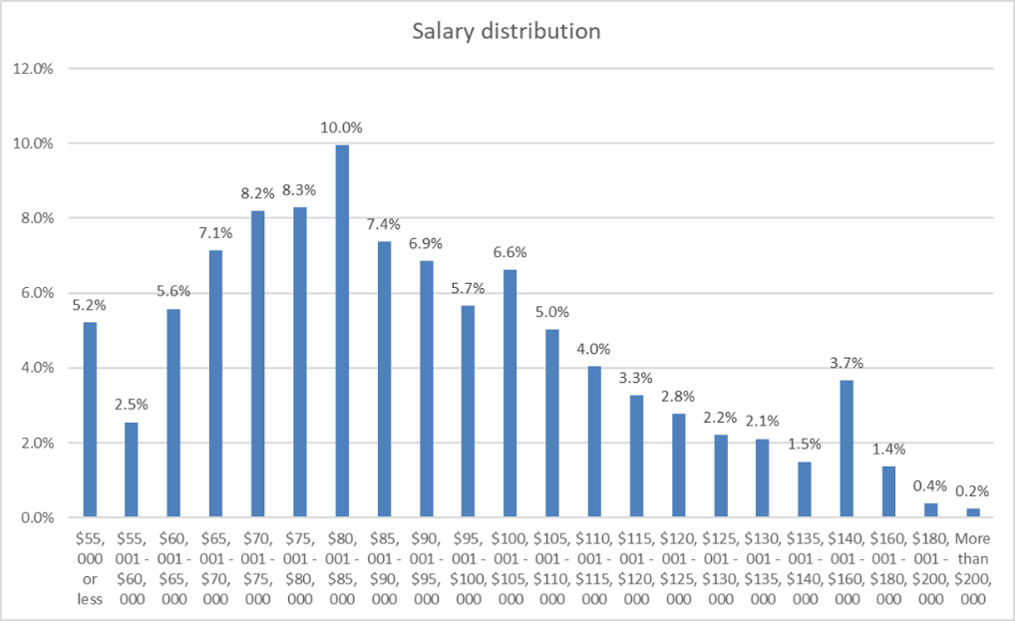
The survey data showing what members earn provides some context to the pressure being felt by many. More than half (54.3%) of members earn less than $90,000. The average member salary is $90,760. The range of salaries members earn is shown in the table below:
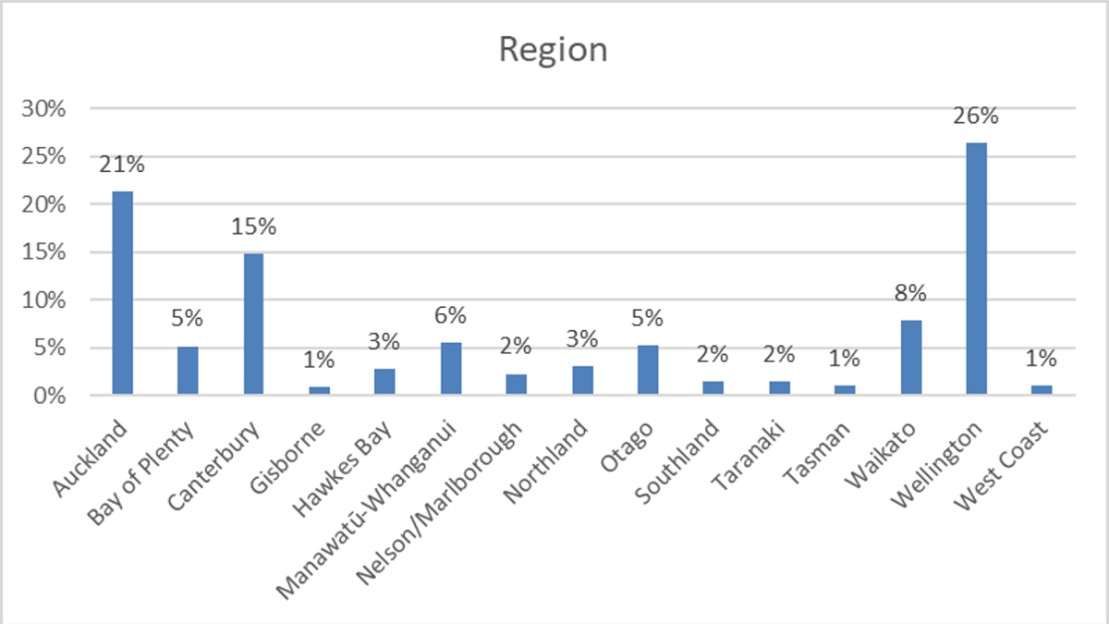
The salary data was from members based in 330 different towns and cities across the motu. The regional breakdown of members who completed the survey is shown in the table below:
THE BRAIN DRAIN
The high cost of living threatens to undermine the future of public and community services, if the next generations of public and community service workers leave the country.
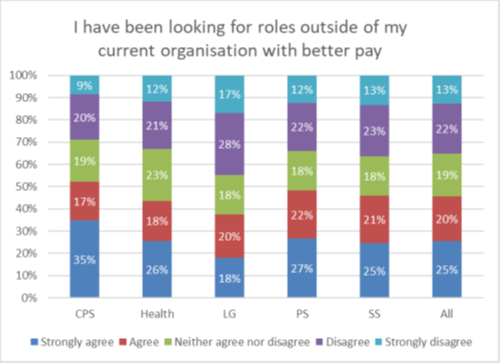
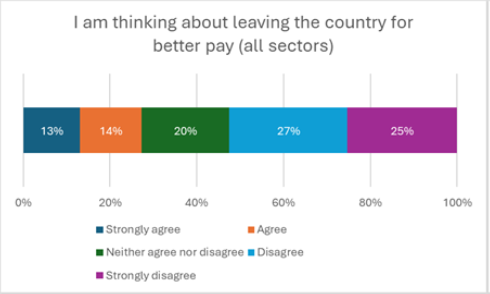
More than a quarter of members are thinking of leaving the country for better pay, the survey showed. Younger workers were much more likely to be thinking of leaving; almost half of members under 25 were thinking of leaving the country for better pay.
JOIN THE UNION
While the Government needs to deliver on its promise to fix the cost of living, belonging to a union can make a difference. Collective bargaining has delivered higher pay increases than workers on individual agreements receive.
Strong public and community services that members deliver and advocate for can reduce the costs that we have to pay. For example, ACC ensures that the costs of injuries are borne collectively rather than individually – and prevents cost-of-living crises for many.
It’s tough right now, but belonging to a union means we are not hopeless. We can work together to push against the tide and make progress.
The proposed Employment Leave Bill, driven by ACT and supported by National and NZ First, will strip entitlements from workers who work part-time or irregular hours, or are paid penal rates.
PSA members have been working hard to show the Government how the changes to how our holidays are calculated will leave them thousands of dollars worse off.
In May, members explained to the Education and Workforce Select Committee how the bill will affect them. Below are some highlights, covering the four key ways the bill will make workers worse off.
GEORGINA HARNETT, HEALTH PROTECTION OFFICER
Georgina spoke about the change in the bill that give her a pay cut, because it would stop her on-call allowance and overtime from being reflected in her pay.
“At the moment, when I go on leave, my on-call allowance and overtime is reflected in my pay. But if I was paid the way this bill was suggested, I'd be paid $400 less a week when I went on leave than I am now. Some of this would be offset by the leave compensation payment, but most wouldn't.
“A couple of years ago, I was burnt out from being doing extra on-call and overtime. And I had to be off work for a couple of months and return to work gradually due to sickness … And the extra allowance in my leave meant that I could pay for medical bills and still have food coming in and cover all my other daily bills as well. And that provided me a lot of financial relief during a really hard time.”
LAURA LUSK, CARE AND SUPPORT WORKER
Laura explained the impact of the bill cutting her leave because her hours vary from week to week.
“Right now, I get 10 days sick leave – that's about 70 hours a year. Under this bill, that would be cut to 36 hours a year, even though I work, on average, 33 hours a week.
“If we have less sick leave, we won't take time off for mild illnesses. The problem with that is that what's mild for us isn't mild for someone in their 90s. The average age of clients where I work is 81. Older people get sick easily, and if we don't get the sick leave that we need, clients are going to get sick.”
She also spoke about the bill cutting leave for anyone working shorter shifts on public holidays.
“At the moment, we get a day in lieu [for working on a public holiday]. That day is why people work on holidays. Under this bill, we would only get 4 hours in lieu on a day like that.
“When we work on public holidays, we're looking after other people rather than spending time with our own families. We deserve a day in lieu for that service to other people and sacrificing Christmas morning with our own children to make sure that others are safe.”
ROSS CAMPBELL, CORRECTIONS WORKER
Ross shared a personal story to illustrate how the changes in the will leave anyone who’s badly injured with less leave.
“I'm going to share a personal experience to you that happened to me back in 2001 when I had an accident and I was off for approximately 2 1/2 years. I followed that by at least six months return to work into the job that I'm into now. Throughout that time, [I] ended up losing my leg.
“So, I needed financial support during that time. Sick days and annual leave days were always there to prop up my income to 100%. Without that, I would never have achieved what I am today.
“This bill will take that away – when you're on long-term ACC, you will not be accumulating leave. I still rely on that now for medical appointments into the limb centre 10 to 15 times a year. But what it did was it allowed me to come back to the job – spend another 20 years in this job.”
OUR VOICES MAKE A DIFFERENCE
The other PSA members who spoke to the Select Committee were Mary Becker, Helen Foley, Andrea McLachlan, Ross Thorby, Trish Lastovicka, Tyler Proctor, Eleanor Haggerty-Drummond, Dom Barry and Daniel Scott. They all gave compelling insights into how the bill would leave them worse off.
We hope the Committee takes their testimony to heart when it reports back on 13 July. But no matter what happens, we will keep pushing back against the changes in this bill that would leave us worse off – the Government cannot get away with taking so much from working people.
Find out more about the Employment Leave Bill and how we’re working to stop it
The last several months have been very busy, with our new Te Kaihautū Māori, Jack McDonald, hitting the ground running, visiting Māori members across the country and leading some significant pieces of work on their behalf, fighting back against this Government’s latest attacks on kaupapa Māori and te Tiriti o Waitangi. This comes at a time when Te Rūnanga o Ngā Toa Āwhina is preparing for Hui Taumata, PSA Congress and the general election later this year.
WAITANGI TRIBUNAL
One of our key focuses has been on advancing the interests of our Māori members through Waitangi Tribunal inquiries.
Wai 2700 Mana Wāhine
In February 2026 we surveyed wāhine and gender diverse Māori members about their experiences as workers in public and community services navigating individual, organisational, and systemic barriers that affect equitable outcomes. We received 873 responses and submitted the survey to the Tribunal in April, as evidence to the PSA’s claim, which has been active since 2017.
Wai 3565 Treaty Principles Reform Urgent Inquiry
Our Māori members were granted interested party status in this inquiry, meaning that we had the opportunity to put forward evidence. Despite a short turnaround to provide evidence, more than 100 Māori members responded with submissions detailing the impact of weakening and removing references to te Tiriti principles in law. Jack presented this evidence at the Tribunal hearings in Wellington on the 3rd of June.
Wai 3327 Te Reo Use in Public Sector Urgent Inquiry
In October 2025 the Waitangi Tribunal released their report on this urgent inquiry, to which Māori members of the PSA had been an interested party. Their findings were a damning indictment of Government policy. The PSA has begun a process of reaching out to public service departments around their response to the report recommendations.
DEVELOPMENT OF PSA TE AO MĀORI STRATEGY
Jack and Te Rōpū Hautūtanga, the PSA’s Māori leadership team, have begun developing a long-term PSA te ao Māori strategy aimed at strengthening a coordinated, union-wide approach to implementing Ngā Kaupapa and te Tiriti o Waitangi, with the aim of growing Māori membership, improving kaupapa Māori support for members and staff and enhancing the PSA’s presence within te ao Māori.
Central to this mahi has been engaging across sectors and teams to ensure collective ownership and success, including meeting with Te Rūnanga o Ngā Toa Āwhina, sector committees, organising groups, enterprise rūnanga, and networks such as Te Whānau Atawhai.
Further hui are planned for the coming months, , culminating in a final presentation at Hui Taumata before wider feedback and sign-off. The initial guiding kaupapa of the strategy include:
• Ārahitanga – building Māori capacity and capability within the PSA
• Tutukitanga – demonstrating the PSA’s influence through industrial and policy gains
• Whakawhanaungatanga – deepening the PSA’s relationships within te ao Māori
• Kanohi kitea – raising the PSA’s profile within te ao Māori
• Kotahitanga – working in solidarity across the NZCTU Rūnanga to strengthen Māori unionism
The intention is that this strategy will guide the union’s kaupapa Māori and te Tiriti work into the future.
HUI TAUMATA
Hui Taumata is being held on 6–7 August this year at the Brentwood Hotel in Wellington.
The theme this year is focused on the general election:
Whiriwhiria! Kei a koe te mana!
Hui Taumata will bring together close to 100 Māori delegates that represent over 12,000 Māori members across health, public services, state sector, local government, community and iwi sectors.
Delegates will have the opportunity to hear from Māori MPs, attend talks from invited guest speakers and leaders across Aotearoa, and participate in workshops.
In April it was revealed that Te Puni Kōkiri (TPK) wasplanning to cut 27 jobs. In the last few years TPK has undertaken severalrestructures which have resulted in more than 75 full time equivalent roleslost at the agency. The proposed cuts would have meant the overall loss of morethan 20 per cent of the entire workforce in just two years.
The PSA was deeply concerned for our members and theirwhānau whose livelihoods were are at risk, but also because the cumulativeimpact of the job losses would decimate the agency’s ability to support theCrown in meeting their te Tiriti obligations and delivering improved outcomesfor Māori.
Over decades,TPK has cultivated a proud reputation in ensuring that public services work forMāori. Workersat TPK hold crucial roles in overseeing Māori development programmes, andadvising ministers and government departments on kaupapa Māori, te Tiriti oWaitangi, and Māori-Crown relations.
TPK failed to properly consult with union members on therestructure plans, despite a collective agreement provision requiring them todo so. We therefore filed legal proceedings with the Employment RelationsAuthority.
In late May, PSA attended a mediation session with TPK.While we did not reach a settlement during that process, shortly after, TPKannounced that they would be effectively backing down on their plans. Whilethere will be minor changes to position descriptions and reporting lines, noworkers at TPK will lose their jobs.
This is a significant victory for our PSA members at TPK andshows the power we have as union members when we take collective action.
Our focus throughout this process has been to protect thejobs and livelihoods of our members, and as such, we have withdrawn legalproceedings.
This outcome sends a strong message to other agencies: theymust uphold the rights of workers and comply with their obligations undercollective agreements.
We know we must be vigilant. Given ongoing budget cuts,there will no doubt be further restructuring at TPK and across the publicservice. We will do everything we can to protect the livelihoods of publicservants and their whānau.
Since taking office, the Coalition Government has overseen a hollowing-out of Māori capability across the public service.
Early on there was a directive from the Government to remove te reo Māori names of public service departments and prioritise the use of English in departmental communications. Nicola Willis sought advice on limiting access to te reo Māori allowances for public servants. The Waitangi Tribunal released a report late last year that found these actions had a chilling effect on what had been the growing use of te reo Māori in government communications.
AN INSIDIOUS TREND
There has also been insidious and consistent trend of Māori and Tiriti capability roles, teams, and agencies in the public service and state sector being targeted for disestablishment.
Under the guise of cost-cutting, the Government’s gutting of public service workforces has had a disproportionate impact on kaupapa Māori services.
The disestablishment of Te Aka Whai Ora, the Māori Health Authority, in June 2024 was an early and particularly egregious example of this.
Te Arawhiti, the Office for Māori Crown Relations in the Ministry of Justice, was also effectively disestablished.
Māori and te Tiriti-focused roles have been cut at a wide range of agencies including the Ministry of Health, Ministry of Justice, Te Puni Kōkiri, Stats NZ, Pharmac, Kāinga Ora, and Inland Revenue.
It seems like every week we are informed of new proposed cuts in the Māori and te Tiriti capability space. There are currently proposals to cut roles at WorkSafe, MBIE and LINZ.
The newly formed Ministry of Cities, Environment, Regions and Transport will have no dedicated Māori or te Tiriti team, despite the original agencies all having had dedicated teams.
CUTS THREATEN IMPROVED OUTCOMES FOR MĀORI
The fear is that the cuts will severely undermine targeted kaupapa Māori policies and Māori-Crown relations programmes which had begun to result in tangible improved outcomes for Māori in education, health, employment, housing, and social services.
This Government is deliberately undermining the ability of the state to address longstanding inequities and barriers to Māori social and economic progress.
This is a radical departure from the work of successive governments in attempting to improve the way that the state engages with and represents Māori.
While progress over the last several decades has been slow and often flawed, there has been a genuine desire to strengthen Māori and te Tiriti capability within the public service and state sector.
FIGHTING AN ANTI-MĀORI AGENDA
The PSA has been fighting in opposition to these cuts. PSA organisers, with the support of Te Rōpū Hautūtanga, have been working with Hinonga Māngai Māori and delegates to resist these changes at the agency level.
We are also working to bring national attention to this issue in the context of the Government’s wider anti-Māori agenda.
We have a responsibility to make the case for an active state that delivers te Tiriti-consistent services alongside whānau, hapū and iwi Māori.
PSA members were heavily represented in the winners and finalists of this year’s Health and Safety Representative of the Year Awards in Wellington on 4 June.
The awards are organised by the Government Health and Safety Lead – a small team providing practical health and safety leadership support to chief executives, senior leaders and health and safety teams at government agencies.
The awards celebrate the amazing work that health and safety representatives do to keep Aotearoa workplaces healthy and safe.
THE IMPORTANCE OF HEALTH AND SAFETY REPS
Health and safety reps are one of the strongest levers that workers can use to implement change in the workplace. Your employer has a responsibility to ensure you have a healthy and safe work environment.
Your health and safety rep is how you and your colleagues can hold your employer accountable. They are elected officials, voted into the position by their coworkers.
AND THE WINNERS ARE…
Congratulations to all the winners and finalists of this year’s awards. We also want to recognise all the hard-working health and safety reps we have across our membership.
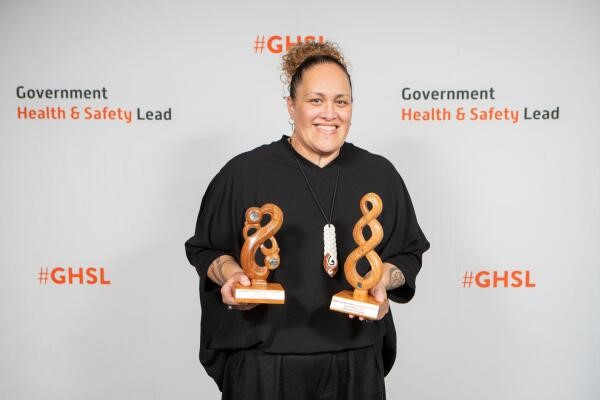
2026 HEALTH AND SAFETY REPRESENTATIVE OF THE YEAR
Catherina “Kat” Kimiangatau | Ministry of Justice
Kat was the individual winner for her work as the regional health and safety rep supporting 66 representatives across Auckland and Northland.
She has strengthened communication and consistency through initiatives like the Pulse Check newsletter, while building strong working relationships with managers, business partners and other representatives to improve shared learning and coordination.
At Manukau District Court, Kat leads local health and safety work, maintains risk registers and is a trusted point of contact for staff. Her practical, people-focused approach has strengthened health, safety and wellbeing across her region.
2026 HEALTH AND SAFETY REPRESENTATIVE TEAM OF THE YEAR
Counties Manukau health and safety rep team | Kāinga Ora
The Counties Manukau health and safety rep team won the team awards for the work they have done to improve safety, engagement and wellbeing across their region through practical, collaborative initiatives.
They established a bi-monthly forum for reps, health and safety leadership and staff that work with the public to strengthen capability, transparency and shared learning. They also revitalised communication with monthly online hui using relatable local content.
The team also created a year-round health and safety calendar and a Teams Connect platform to support planning, information sharing and collaboration between sites.
Their work extended to emergency readiness, business continuity and Counties Manukau’s first Compliance Week, which achieved full staff participation.
Together, they have built a more connected, consistent and proactive safety culture.
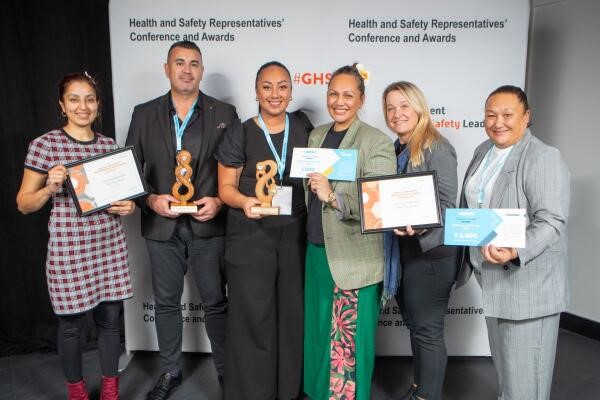
2026 INDIVIDUAL FINALISTS
Avantika Masand | Ministry for Primary Industries
Avantika was recognised as a finalist for the work she has done to strengthen health and safety in the Aquatics Team and wider directorate through practical improvements to PPE, equipment and risk processes.
She has also championed respectful behaviour and mental wellbeing, helping build stronger safety capability and consistency across teams.

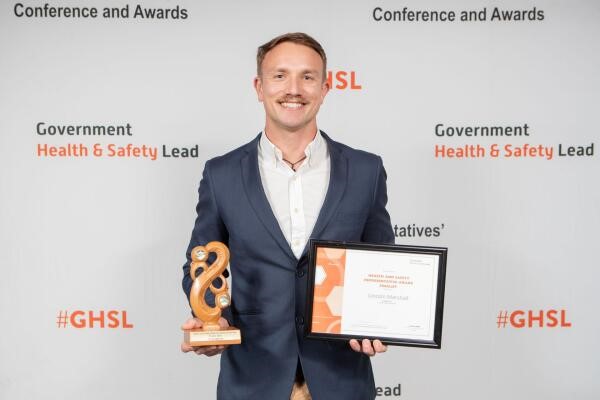
Lincoln Marshall | Kāinga Ora
Lincoln was recognised as a finalist for the work he has done to strengthen everyday safety culture through calm, practical leadership, clear communication and consistent follow-through.
His approachable style encourages staff to raise risks and helped embed health and safety as a normal, supported part of daily work.
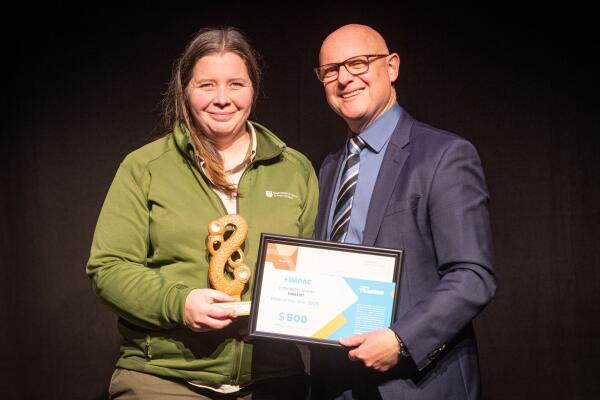
Robyn Dewhurst | Department of Conservation
Robyn was recognised as a finalist for the work she has done to strengthen health and safety culture through proactive, inclusive leadership that improved engagement, accountability and capability across her team.
Her work has helped ensure staff voices are heard and supported safer, healthier ways of working.
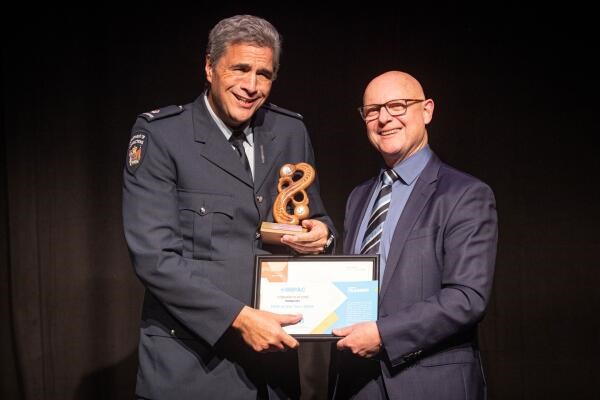
Craig Mackey | Department of Corrections
Craig was recognised as a finalist for the work he has done to provide steady, inclusive health and safety leadership – strengthening collaboration, wellbeing initiatives and site processes.
His practical approach and operational experience have helped improve participation and emergency readiness.
2026 TEAM FINALISTS
Donna Williams-Stewart and Sharmla David | Land Information New Zealand
Donna and Sharmla were both recognised as team finalists for running a successful wellbeing initiative that brought practical health, safety and wellbeing support to kaimahi.
Through strong planning, collaboration and leadership, they helped embed wellbeing more deeply into workplace culture.

GETTING INVOLVED
It’s important to know who your health and safety rep is. If you don’t have one at your workplace, work with your colleagues, other members, delegates and organiser to hold an election to appoint one. Once elected, the rep must complete a training course with NZQA.
Once qualified, your rep can issue a Provisional Improvement Notice, or PIN – a written notice requiring your employer to remedy a situation that poses a health and safety risk.
If you have an interest in health and safety and would like to be involved in the PSA Health and Safety Network, please email your contact details to healthandsafety@psa.org.nz to be added to our mailing list.
PSA delegates and staff are working hard to prepare for and support local government sector workers about to go through major reforms this year.
Aotearoa’s local government sector is undergoing an unprecedented series of changes in response to legislative reforms and directives from the National-led Coalition Government.
The Government announced in December that regional councils will be dissolved, and then just five months later, asked local councils to determine how they could best amalgamate under the Head Start programme.
These major structural reforms come on top of new rates-capping legislation – which we expect will constrain what councils can achieve – as well as the biggest changes to the Resource Management Act in 30 years.
We understand that many of our members working for councils and other local government organisations will be already feeling pressure, and may be feeling uneasy – especially against a backdrop of three years of austerity, restructures, and job cuts.
THE GOOD NEWS: WE’VE BEEN SUCCESSFUL BEFORE
Many PSA local government members will remember the Auckland Super City amalgamation, which took three years of formal planning before its launch in 2010, and much more recently, the merging of Auckland Transport into Auckland Council.
As a union, we worked closely with management over both processes, providing detailed feedback on proposed changes and sitting in on dozens of meetings. As a result, both management and workers were able to work through impacts on staff together and in good faith.
WE MUST HAVE A JUST TRANSITION
PSA council workers acknowledge that there’s an appetite for local government reform.
What we are focused on negotiating are four key points:
1. No job losses: We will not accept cuts to roles under the cover of amalgamation.
2. All workers must keep their current terms, conditions and remuneration.
3. Union members must be actively engaged in every step of the transition.
4. A commitment to delivering on te Tiriti obligations both in transition and planning for new local government organisations.
NEXT STEPS
Local government organisations are required to make their proposals for amalgamation by August, which are dependent on final decisions by Cabinet in May 2027.
You can read the full timeline (as well as more information on the amalgamation) on the Department of Internal Affairs website.
We can expect transition plans to be refined and executed in the latter half of 2027.
In the meantime, PSA union members can get organised. Talk to your workmates who aren’t part of the union, and consider becoming a delegate if you aren’t one together. We’re stronger together.
Public Services International (PSI) brings together public service unions from around the world to defend workers’ rights, strengthen quality public services and ensure public service workers have a voice in global and regional decisions.
In Oceania, that work is focused on the issues that matter to PSA members and our fellow unions.
CLIMATE JUSTICE AND QUALITY PUBLIC SERVICES
Climate change is already affecting workers and communities across the Pacific. The work that PSI does in Oceania makes sure the voices of public service workers are heard in climate discussions, including through the PSI Global Programme of Action and support for a fossil fuel non-proliferation treaty.
Workers must be at the table when climate policies are designed and implemented.
LABOUR MIGRATION
Labour migration is a growing issue for Pacific unions.
An example where PSI is focusing on labour migration is the organisation’s work on the Addressing the health workforce crisis in the Pacific report, which will help unions make the case that labour mobility must not come at the expense of already stretched public health systems. Decent work, safe staffing and sustainable health services need to be built into migration arrangements.
INSOURCING AND RESISTING PRIVATISATION
Another major focus is the fight against privatisation and the push to bring services back into public hands. PSI is developing an insourcing campaign training tool and connecting affiliates with global insourcing campaigns and research. This work supports unions to show that public services are best delivered for people and communities, not profit.
Across the region, PSI is also tracking the impact of development assistance, international financial institutions and multilateral agencies on public services. The aim is to challenge policies that weaken government capacity and to promote direct public provision, decent jobs and accountable services.
INDIGENOUS WORKERS’ VOICES AND LEADERSHIP
PSI Oceania is an important proponent in strengthening the voice and leadership of Indigenous workers across the global union movement. This includes recognition and representation in the PSI Global Programme of Action, and support for First Nations structures and solidarity across public sector unions. PSA representatives are leading this effort based on our own commitment to te Tiriti o Waitangi.
The principle guiding this work is simple and powerful: “Nothing about us without us.”
BUILDING UNION POWER IN THE PACIFIC
Capacity building and organising are at the centre of PSI’s Oceania programme.
This is demonstrated in the Building of Union Power for Quality Public Services in Pacific Island Countries project, which supports public sector unions to organise, bargain and advocate more effectively. A Pacific-style organising module will help affiliates build practical skills in ways that reflect the realities of Pacific union work.
This was supported with the PSA providing an educational trainer, Frank Jackson, to assist in delivering this model.
Whether the issue is digitisation, artificial intelligence, trade, tax justice or the future of public services, PSI provides a way for unions to work together and learn from each other.
USING EVIDENCE AND STORIES TO SUPPORT CAMPAIGNING
For PSA members, PSI’s Oceania activity is a reminder that the struggle for strong public services is regional and global. Public service workers face common pressures, including underfunding, privatisation, climate change, labour shortages and attacks on workers’ rights.
PSA members are part of that international movement. By supporting PSI activity in Oceania, we strengthen solidarity with public service workers across Oceania and help build the quality public services our communities need.
In May 2026, the International Court of Justice (ICJ), the highest judicial body in the United Nations, confirmed via an advisory opinion that the right to strike is protected under international law.
The confirmation comes three years after the International Labour Organisation (ILO) formally asked the ICJ to consider the right to strike as being protected under ILO Convention 87 – Freedom of Association and Protection of the Right to Organise.
This was the first time the ICJ had been asked to make a decision about the interpretation of any ILO convention.
OUR HISTORY WITH CONVENTION 87
Convention 87 is a fundamental post-war ILO convention, written in 1948.
The Convention was ratified to enable workers to associate with and join a labour organisation of their own volition, free of outside influence and without fear of retribution.
Aotearoa New Zealand is a founding member of the ILO but is still not a signatory to Convention 87 – despite one of the main objectives of the Employment Relations Act 2000 being “to promote the observance in New Zealand of the principles underlying International Labour Organisation Convention 87 on Freedom of Association.”
Aotearoa is an outlier in the international community for not ratifying this Convention, and we are regularly criticised by the ILO for our failure to ratify it.
CONFIRMING WHAT UNIONISTS HAVE LONG ASSERTED
The ICJ confirmed what unionists in Aotearoa and across the globe have asserted for decades – that the right to strike is protected under Convention 87.
While Convention 87 does not explicitly mention strikes, the ICJ advises that the right to strike falls within the right of unions to organise activities.
The International Trade Union Confederation has thanked the ICJ for its advisory opinion and claimed it as a victory for the ILO and its governance structures, citing that striking is a fundamental means through which workers defend their interests, secure decent work, and contribute to democratic societies.
A MAJOR POLITICAL AND LEGAL INFLUENCE
While ICJ opinions are not legally binding on courts in the usual sense, they carry major political and legal influence internationally. This decision is also particularly influential for shaping national policy and for courts when they interpret laws.
The Confederation stressed that the legal clarity, while important for workers and trade unions, is also important for governments and responsible businesses.
Above all, this is a very important advisory for workers in Aotearoa, as our Government continues its attacks on employment protections.
The PSA calls on the Government to honour its position as a founding member of the ILO and ratify Convention 87.
Unions Wellington committeeperson and PSA organiser, Ashok Jacob, details the Wellington Works report and their fight to keep public services in public hands.
Unions Wellington were confronted by the opposition to our campaign to retain the public stake in Wellington Airport. We saw the power of organised money and bureaucratic inertia, and by the last stage of the campaign, we began to quietly question whether we could win. When we did, we were taken aback. Over decades, the stripping of ownership and capacity from the state had become such a bipartisan inevitability that many people forgot it could be stopped.
KEEPING THE MOMENTUM
In the wake of the Keep the Airport Ours campaign, we wondered how we could capitalise on this rare win for public ownership. We commissioned research into functions of our local council that had been outsourced in the past, having been told of failed attempts to keep waste collection and the electricity network under public ownership. We were buoyed by the popular support for public ownership and wondered how we could use this for another campaign.
Our initial research revealed that three major outsourced utilities in Wellington are ultimately owned by holding companies registered in the same building in the Cayman Islands, the world’s most notorious tax haven. One of them, EnviroWaste, which holds the contract for local rubbish collection, operates an ongoing $120m loan to their shareholders, on which they pay a third of the tax they would pay if they were registered in Aotearoa.
PROFITS OVER PEOPLE
The research was clear: private companies profit from operating local public services, and the profits are often paid to shareholders as low-tax dividends from overseas holding companies. These monopoly deals cannot stand – especially when the cost of remedying much of the country’s $200bn infrastructure deficit falls on local councils.
From these findings, we developed a report – It’s Time for Wellington Works, which examined how Wellington City Council could bring back outsourced services into public ownership. The report was met with praise by activists and academics from around the world and was launched to a packed hall at Newtown School in April.
The report found that outsourcing costs money from the outset, by paying excess profits to monopoly contractors. In the long run, it erodes the capacity of councils to understand what they are actually paying for, leading to underestimated costs and mismanagement of large projects and specialist work.
SUSTAINABLY FUNDING PUBLIC SERVICES
The report makes simple recommendations to end the upward transfer of wealth and ensure public services are funded sustainably:
1. Investigate insourcing “low-hanging fruit” services with comparatively low up-front capital requirements
2. Fix the procurement strategy and procurement policy, taking organisational capacity and efficiency into account rather than a narrow focus on cost
3. Actively oversee Tiaki Wai and council-controlled organisations, making sure that bodies operating with public money like Wellington Water/Tiaki Wai aren’t cosying up with monopoly contractors
The Wellington Works recommendations can be adopted by any council across Aotearoa – in the last forty years, the impacts of outsourcing and privatisation have been suffered by every council. With strong political leadership and dedicated campaigning, we can rebuild state capacity to meet the social and infrastructure challenges of the twenty-first century.
Ashok Jacob is a committeeperson on Unions Wellington and was one of the core group behind the campaign against the sale of WCC's shares in Wellington Airport. By day he works as an organiser for the PSA.
Got a question? Get in touch with one of our PSA team members today:
PSA House, 11 Aurora Terrace
Wellington, New Zealand.
PO Box 3817,
Wellington 6140

