

Ahead of the 7 November 2026 election, the PSA has released a package of new research and resources on the true cost of cancelling pay equity, and what restoring it would deliver for workers, families, and the economy.
The PSA is calling on Parties to restore pay equity and commit to settling and fully funding the care and support workers' claim within the first 100 days of being elected, on the basis of the agreed undervaluation. The work has been done. What is needed now is the political will to make it happen.
Our work is having an impact
The Green Party has announced it will restore pay equity law to where it was prior to the coalition government gutting it in 2025, along with funding a settlement for the 65.000 care and support workers whose claim was stopped by those changes. While the party has publicly committed to at least a 30 percent pay equity uplift, the final care and support settlement will be agreed through bargaining with the workers and their unions.
The Labour party have also said they will restore pay equity legislation in its first 100 days and have committed to an immediate pay rise to care and support workers of $4 per hour from 1 January 2027, or approximately a 13-17 percent up-lift.
The campaign continues
History tells us that we must not stop organising and campaigning for pay equity. While it’s clear that the only hope care and support workers have of getting pay equity is to change the government, that alone will not be enough. We need to push for a full settlement based on the previously agreed undervaluation and hold political parties to account.
We have released a package of new research, webinars, social media reels and resources outlining the true cost of cancelling pay equity, and what restoring it would deliver for workers, families, and the economy.
Please feel free to draw on the findings, cite the figures, and share the materials with others in the lead up to the election.
Lifting the lid on pay equity for care and support workers
In this webinar, Angela Meyer and Tania Domett, two of the three fictional detectives behind Project Gender’s ShortChanged podcast, investigate the real story behind the cancelled care and support workers’ pay equity claim. A great watch to help understand what happened with pay equity.
They interrogate a panel of experts:
- Melissa Woolley, PSA
- Nanette Cormack, PSA
- Glenda Alexander, NZNO
- Clint Smith, Victor Consulting
Watch this explainer on the history of pay equity for care and support workers
Pay equity would improve the lives of 136,000 New Zealand children
New modelling shows 136,000 children, in 91,000 families, would benefit from restored pay equity, including 11,000 children currently in poverty. Families would gain an average of $300 a week.
Analysis of Treasury modelling shows pay equity would increase GDP and employment at lower cost
This analysis finds that the Treasury’s own MATAI modelling shows reinstating pay equity would grow the economy by $13.5b and create 13,000 jobs, at a net fiscal cost of $6b over four years or $1.5b a year.
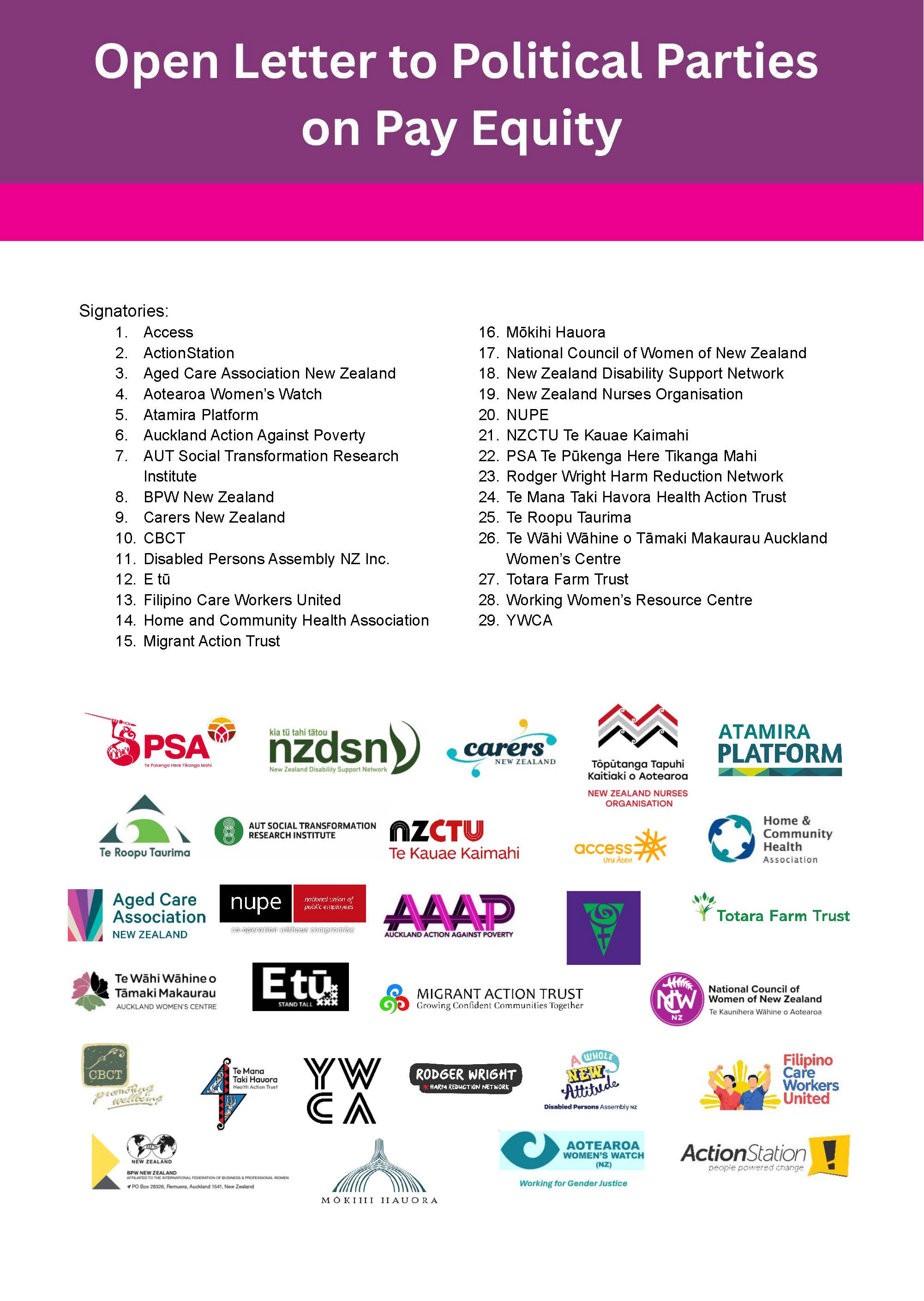
Open Letter to Opposition Parties
29 organisations have written to opposition parties asking for a commitment to fund and settle the care and support workers' pay equity settlement in the first 100 days.
The letter was sent to opposition parties as they are the only hope after the current Government cancelled the care and support workers claim, banned us from raising another and gutted the Equal Pay Act.

Voices of Pay Equity Lost
This report provides first-hand accounts from care and support workers on what the 2025 cancellation has cost them and their families, alongside a timeline of the Bartlett case and the fight for pay equity since 2012.
You can watch clips from PSA members, Kate and Christie, who took part in the report, speaking at the report launch event below.
Unions High Court Legal Action
Five unions, New Zealand Nurses Organisation, Tertiary Education Union, Post Primary Teachers’ Association, the Public Service Association, and the New Zealand Educational Institute – launched a High Court challenge on the grounds that the Government's actions on pay equity are inconsistent with the New Zealand Bill of Rights Act 1990. You can watch and share the talk below with Peter Cranney, one of the lawyers representing the unions, discussing the case with PSA National Secretary, Fleur Fitzsimons.

