

Looking back over 2023, two words come to mind – Stand Together. They were the theme of our election campaign, and it’s a message of solidarity that is going to be important as we start dealing with a new government.
We are still waiting to see what policy programme the government coalition will hash out. Whatever happens, we will be reinforcing to the new government that public servants, like other workers, are covered by well-established and hard fought-for, employment obligations. We’ll also continue to promote the value of public and community services and the excellent work PSA members do to deliver these for New Zealanders.
While the election dominated the year, it was not the whole story. There’s been a number of successes over the past 12 months and we celebrate some of these stories – including progress on pay equity – in this edition of Te Mahinga Ora.
An event we celebrated in 2023 was our 110th birthday. Some of the PSA’s eventful history, is highlighted in Policy Advisor Grace Millar’s entertaining account of some of the
significant and quirky events from our past.
2023 was also the year of the big rain and PSA members stepped up to help New Zealanders deal with a constant spate of floods. Auckland PSA member Kath Ashley’s inspiring story is just one of the examples of the mahi put in by many PSA members.
Recently at the Public Services International Congress in Switzerland I was lucky enough to meet up with unionists from all over the world. I attended the congress with National Secretary Kerry Davies and Māori Vice President Lesley Dixon, who presented on the topic of Decolonising Labour Regimes. We were blown away to be part of a gathering of 1200 committed unionists and we learned first-hand that we share many common struggles with our comrades from around the world.
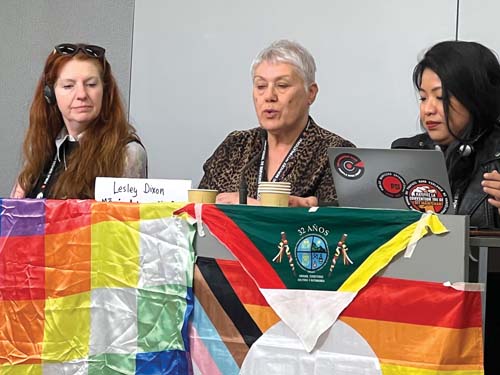
Māori vice president Lesley Dixon (middle) at PSI Congress
After the congress we met unionists in England and Wales. My personal highlight was meeting the Welsh unionists and learning about their social partnership approach, which means all government agencies must engage with unions. It was uplifting to see how including the workers’ voice can lead to much better outcomes for people.
It’s been quite a year and we will all looking forward to a
summer break. To help take our minds off serious matters, we’ve put together a quiz and some suggestions of things you may want to read and watch over summer, along with our first ever PSA Summer Hits Spotify playlist.
Over the holiday break I hope you find joy celebrating, and sharing time with family and friends, so you start 2024 with a refreshed state of mind.
Naku iti noa, na
Benedict Ferguson (He/Him)
President Te Pūkenga Here Tikanga Mahi | PSA

The general election, as they often do, has delivered a new government. After the more than 600,000 special votes were counted National, with 48 MPs, will need the support of ACT (11 MPs) and New Zealand First (eight MPs) to form a stable government.
The parties forming the coalition campaigned on policies that were less worker-friendly than the outgoing administration, such as ending Fair Pay Agreements, reintroducing 90-day trials and cutting public sector spending by 6.5%.
The reality of the election cycle means that governments change and we must adapt. We’ve done this in the past, making gains for members and growing our membership under both National and Labour-led governments. We are always committed to working constructively with the Government of the day.
At the same time, we will harness the collective strength of our 90,000 members to fight hard to retain and celebrate the strong public and community services New Zealanders
rely on, and for the jobs of PSA members who deliver them.
We have a firm base to campaign for public and community services. The latest Kiwis Count survey results found that 8 out of 10 New Zealanders trust the public service based on their personal experience. In the survey public service workers are rated highly for their honesty, for doing their best to help people and for the respect they show.
While we will likely have less access to Ministers in the new government, we will strengthen our work with allies, including other unions, advocates, MPs, community, iwi and ngā kaupapa Māori to build support for positive change.
The strength of Te Rūnanga o Ngā Toa Āwhina – which represents more than 10,000 members who identify as Māori – provides us with a strong platform to advocate for improved public service delivery with and for Māori.
Similarly, the strength of PSA Youth means we are well placed to tap into the vitality and commitment of young voters, who have become a powerful values-based political force.
One of the benefits of belonging to a union is that you don’t have to face change alone. There’s strength in being part of a collective, and wisdom you can tap into. If you haven’t experienced a change in government before, talk to PSA members who have been around for a while. They can help provide a broader view in uncertain times.
For all of us in the PSA, it’s critical we stay true to our enduring values by demonstrating solidarity. We have always sought to use our collective strength to stand together to influence the political, economic, industrial and social environment in the interests of all members – and that’s not about to change.
Marc Williamson wins Delegate Achievement Award
The Delegate Achievement Award is awarded to exemplary delegates who demonstrate leadership and work above and beyond the expected duties of the delegate role.
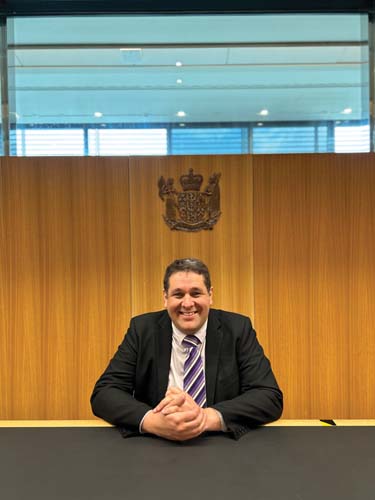
Recent recipient Marc Williamson has made significant contributions to PSA members at the Ministry of Justice (MOJ).
Marc has been a local, regional, and national delegate, and is co-convenor for the National Delegates at MOJ. In nominating Marc for the award, his MOJ Southern delegate team said Marc’s leadership and experience during the 2022/23 bargaining were significant, and he contributed beyond what is expected of national delegates. His invaluable contribution ensured PSA members understood and voted on their 2023 settlement meaningfully.
Marc provides support for members around the region, especially where delegate coverage is light.
“Marc has been instrumental in growing our membership in Christchurch and supporting the growth of new delegates. He’s a wealth of knowledge with all things PSA and MOJ-related and carries the best interests of his collective at heart,” says PSA delegate Charlotte Thompson.
“Marc is a leader by example, an amazing mentor, and a friend to all,” Charlotte says.
Celebrating Public Service Day
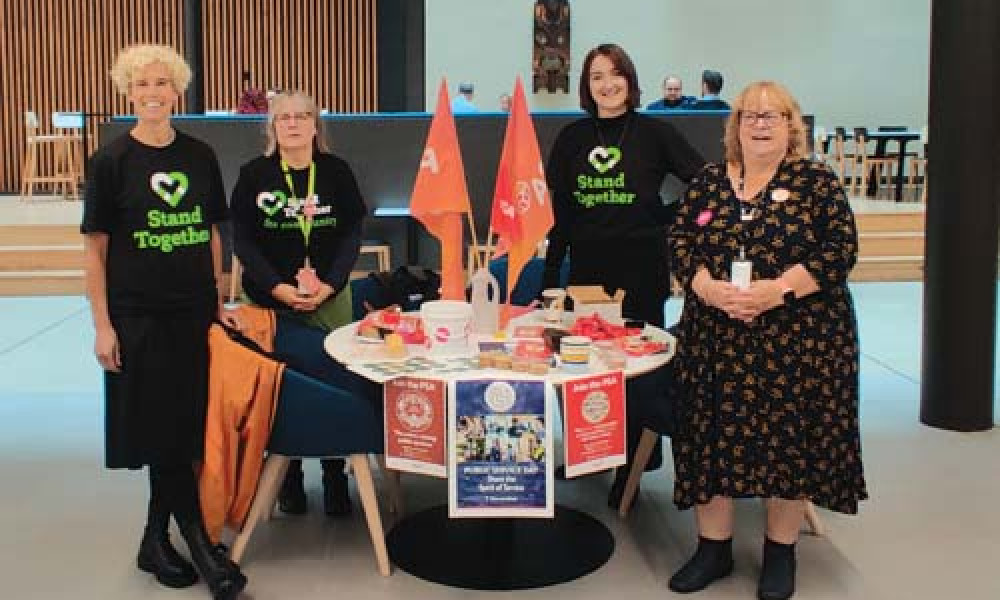
In Wellington and Auckland PSA organisers were out and about visiting members and celebrating Public Service Day on 7 November with some kai and kōrero.
Started in 2018, Public Service Day celebrates the day the Public Service Act 1912 became law. The law established a professional, politically neutral public service.
Now we celebrate it as an acknowledgement of the critical and important work our public service workers do. We also used the day as an opportunity to remind the incoming government of the valuable work public service workers do.
Public service leads way in closing pay gaps and promoting women leaders
New data shows the public service is continuing to lead the private sector in closing gender and ethnic pay gaps and promoting women to leadership positions.
The 2023 Public Service Workforce Data recently released by Te Kawa Mataaho (Public Service Commission) also underlines efforts to the lift the pay of low-income workers.
The latest data at 30 June 2023 shows:
- The public service gender pay gap fell to a record low of 7.1%, compared with 8.6% generally
- The Māori pay gap is 5.4%, down from 6.5% in 2022
- The Pacific pay gap is 16.6%, down from 17.7% in 2022
- Women now occupy 55.9% of senior management roles – up slightly from 55.8% last year and 39.8% in 2010.
There was also progress in lifting low-income workers pay reflecting the outgoing Government’s priorities and settlements under the Public Service Pay Adjustment process.
The biggest increases in pay were for the lowest paid and non-managerial staff. Those earning less than $60,000 now comprise 9.1% of the public service workforce, down from 16.8% in 2022 and 38.6% in 2018.
Your right to protest and be politically active
You have same rights of political expression outside of the
workplace as others over issues such as the ongoing humanitarian crisis in Gaza when you work in public and community services.
At the same time people working in public services, including local government, have an obligation of political neutrality in their work.
This obligation shouldn’t stifle legitimate political activity in your own time.
The principle is to keep politics out of your work and your work out of political activity.
In practice, this means that in your political activity you do not identify yourself with your work, give the impression you’re giving the view of your agency when it’s your own view, reveal advice given to Ministers/Councillors that is not
public, disclose information from your work you are not authorised to disclose, or use your employer’s resources.
With social media, we recommend that your personal accounts are not associated with your work– so that, for instance, you don’t describe yourself as working for your agency, etc. If you need advice, contact your PSA delegate or organiser.
Youth on agenda at USU conference
Attracting younger members to unions was on the agenda when PSA President Benedict Ferguson and National Secretary Duane Leo attended the United Services Union
(USU) Conference in Penrith, Sydney in late August.
The United Services Union represents 30,000 members who work in local government, utilities, aviation and the private sector in in New South Wales and the Australian Capital Territory.
Benedict says the USU was grappling with an aging membership and the interested in the PSA’s approach to recruiting younger members and the role of PSA Youth.
The PSA Youth network for those aged 35 or under has more than 26,000 members, which is about 29% of our membership.
The USU conference was attended by more than 250 delegates, and other attendees included Australian Prime Minister Anthony Albanese and New South Wales Premier Christopher Minns.
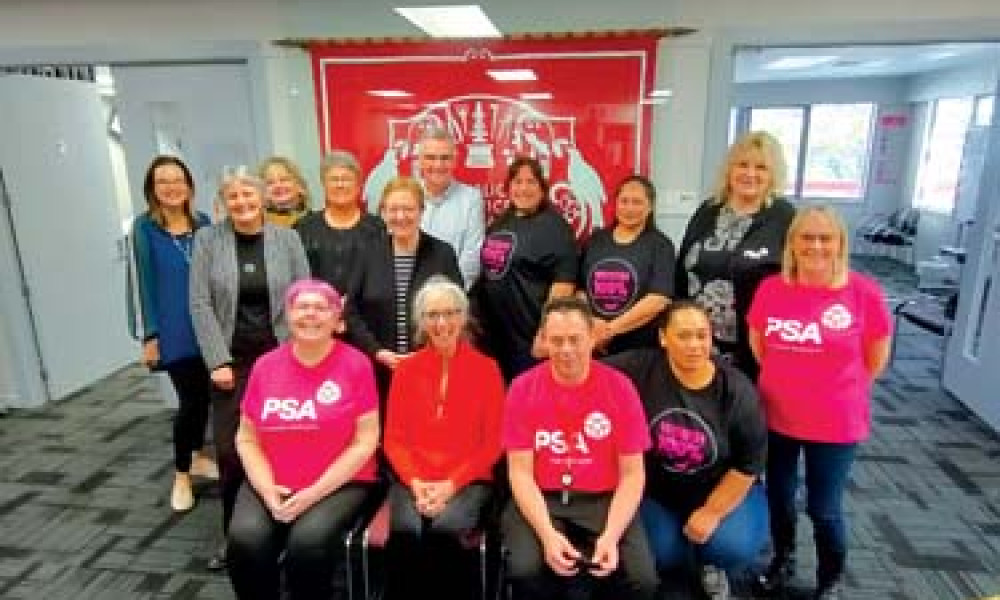
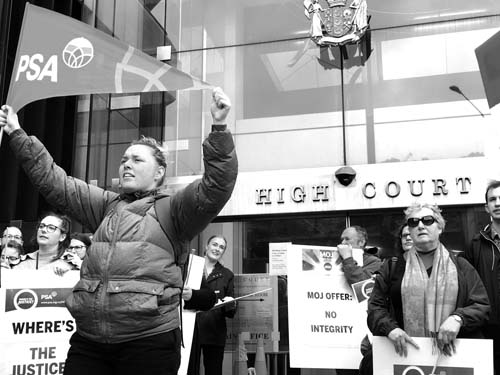
People in Public and Community Services work hard for their families and communities. Some give their all as care and support workers, librarians, hospital interpreters and social workers. But for far too long, work that has largely been done by women has been undervalued and underpaid by employers, governments, and funders. That legacy and those decisions have left far too many women struggling
to make ends meet on low wages, improperly remunerated for what they do, and weakened core services all of us rely on.
One of the most effective levers to ensure people of all genders are paid fairly are pay equity claims enabled by the Equal Pay Act. These settlements are life changing for people who are most often the ones doing the important, difficult work of strengthening communities and caring for people.
For example, this year 5,000 social workers based in iwi and community services won pay equity, with the average person covered receiving a 27% pay increase. For community-based social worker and PSA member
Stephanie Brown, pay equity would, “transform our sector and the lives of social workers”.
A rigorous process
Pay equity claims follow a rigorous process overseen by Te Kawa Mataaho the Public Service Commission to establish how much people's work has been undervalued due to gender-based pay discrimination, then rectify that injustice by establishing pay rates that reflect the genuine value of the work.
First, unions raise a claim against employers and establish that its arguable. Interviews are conducted with workers to produce a job profile – a description of what people covered by the claim do at work, including the levels of skill, responsibility, experience, and effort required of them. That profile is analysed against job profiles of comparable work that has mostly been done by men, like fisheries officers, customs officers, or health and safety inspectors. Unions and employers enter bargaining to agree on pay equity rates, terms, and conditions. Finally, people covered by the claim are offered a settlement that they vote to accept or reject.
Some successes...
Roughly 16,000 Allied health workers across 120 professions including social workers, hospital dental assistants, and sterile sciences technicians will receive an average 20% pay rise after five years of organising to achieve their claim.
Nurses voted to accept their claim in July, settling a joint claim by the New Zealand Nurses Organisation (NZNO) and the PSA that included a staunch struggle to secure adequate backpay for the new rates. Librarians and interpreters working for Te Whatu Ora (Health New Zealand) voted to accept their settlement in November (read more about these success stories).
These are significant steps toward equity that have been hard-won. Like most disruptions to the status-quo, pay equity claims receive pushback – often in the form of bureaucratic delays and attempts to undermine the process. Despite the evidence-based framework, members often must organise, lobby, and rally to ensure their settlement goes through.
But there's a lot more to do...
While these are significant steps, several pay equity claims are yet to be resolved. 65,000 care and support workers go to work each day on undervalued rates because of interference in their claim by funding agencies like Te Whatu Ora, leading to massive delays to their claim. The PSA, E tū, and NZNO have spent more than a year rigorously proving and measuring the undervaluation of care and support workers, with each milestone receiving the requisite sign-off.
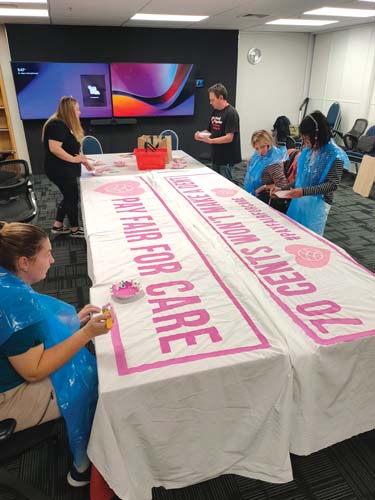
But in the final stages, a surprise, unnecessary review was sprung on them to undermine the process. The situation is now urgent; the Care and Support Workers Pay Equity Settlement Act is due to expire on 31 December with no assurance of how its protections will be maintained. Unions are working hard to progress the claim in spite of the review to ensure people are paid what they’re worth.
The PSA has recently brought the claims for library assistants in local government and admin and clerical workers in the public service to the point where assessments of their work, and the work comparable roles in male-dominated industries has been completed.
Get involved
The PSA has been organising hard for pay equity since our beginning. We will not stop until work done by women is paid justly. We’re calling on all members to take opportunities to be in solidarity with your fellow members and take action to support their pay equity claims in the coming months.

Your right to belong to a union is an important part of your right to freedom of association. It is as fundamental as your right to free speech or to vote. You are entitled to belong to the PSA and stand together with your colleagues.
PSA membership is especially important in times of uncertainty and change. Encourage your colleagues to join the PSA, so they can receive the benefits and protections of
membership.
New Zealand has enshrined your union membership rights in two ways:
- The right to join a union and be free from discrimination because you do is enshrined in the Freedom of Association provisions set out at Part 3 of the Employment Relations Act 2000. You have a clear, and legally enforceable right to be free from any form of undue influence because of union membership.
- This right is further entrenched by the freedom to join a union, bargain collectively and organize being one of the eight core fundamental conventions of the International Labour Organisation, of which New Zealand is a member.
These domestic and international commitments uphold your right to join a union and collectively bargain. You can feel secure belonging to the PSA and exercising solidarity with
your fellow workers.
Collective strength during change
Another source of the security can be found in the collective agreements the PSA negotiates on behalf of members. If you are covered by a collective agreement, you’ll almost certainly have a section covering your rights in a restructure or redundancy situation. Your employer must follow the
processes in the collective agreement and the PSA will hold them to account if they fail to do so. These processes help to ensure you receive due notification of any changes and enable your union to provide input concerning the proposals before they are finalized.
Your site organisers and delegates will be heavily involved in any restructures and will work to ensure you’re treated fairly during them. Get to know your delegate, so you know who to speak to if you have questions or need support.
Many redundancy clauses empower you and your union with extra entitlements. Often they allow you to speak up on the impact of any changes on you and your work. Each collective agreement is slightly different, so read yours carefully to find out what your rights are in times of change management. You can find your collective agreement on MyPSA.
Need support?
If you feel you have been unduly pressured or discriminated against because of your PSA membership or mistreated during a restructure, contact your local delegate or member support team, Te Roopu Tohutohu Manaaki:
Phone 0508 367 772 (Mon – Fri 8:30am – 5:00pm)
Email enquiries@psa.org.nz
This article was prepared by the PSA Legal Team.
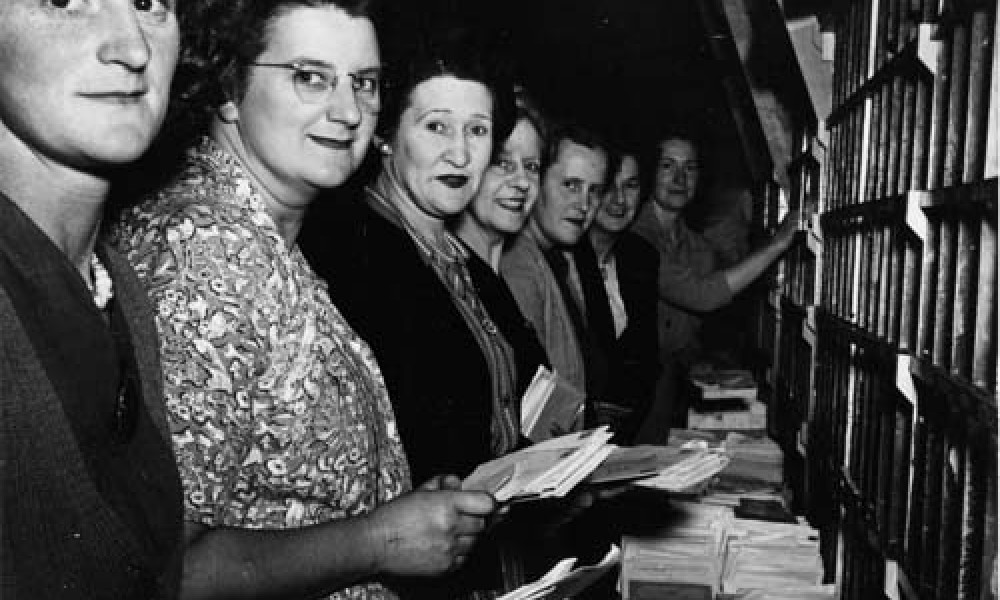
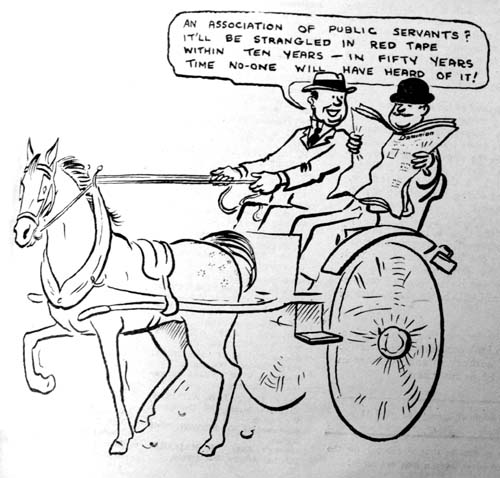
In 1913 when the PSA began, public service workers were living in a very different world: the biggest department was the Railways and one of the PSA’s first victories was a special allowance for those who had to use their horse for work.
One thing that hasn’t changed was that people wanted good secure work and a voice in their workplace. They knew that these changes could only be achieved by working collectively.
Over the past 110 years PSA members have won some extraordinary victories. In 1974, dental nurses marched on Parliament and the government conceded their demands before the protest had even dispersed. The delegation who had been meeting with ministers came out and told the waiting nurses: ‘they have given us everything we wanted’.
The PSA has also survived substantial attacks. In 1987, the
government restructured the entire public service. Until then, public servants were paid according to their occupational group, not their department. To protect wages and conditions, the PSA negotiated a base document with
the State Services Commission that acted as a starting point for collective agreements in each of the departments. The negotiators’ hands were strengthened by nationwide protests against the changes.
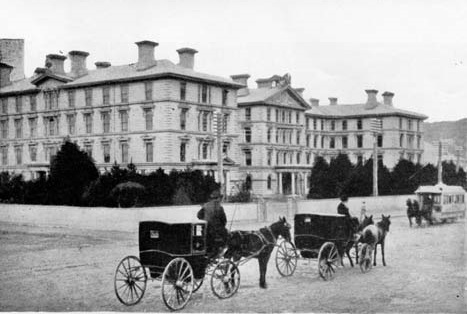
Government Buildings, Wellington: "the biggest wooden building in the world" as it appeared when the PSA was founded in 1913.
Championing equal pay
In 1913, most public servants were Pākehā men, and so were most PSA members. While this limited the PSA’s worldview, the union took some early steps towards solidarity.
At its very first conference, the PSA passed a motion supporting equal pay for women – at that time it was normal and fully legal for women to be paid less than men for doing the same job. The following decades saw some small equal pay victories, but it was when women in the PSA started to get together in the 1940s and 1950s that the campaign gathered momentum.
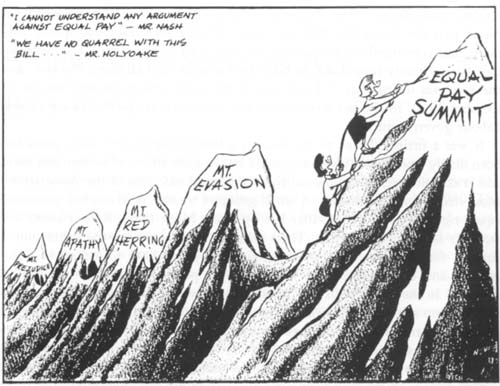
Workers in the public service gained equal pay in 1960. But work that was predominantly done by women was still undervalued – and still is. A 1960 cartoon showed women climbing a mountain labelled the equal pay summit, subtitled, “Well we’re practically there, but it makes you wonder why it has taken so long”. A comment even more true 63 years later – when we’re still trying to settle pay equity claims.
Confronting racism
PSA members also fought for equity in the wider world. In 1959, the Papakura Hotel refused to serve PSA member Dr Harry Bennett, because he was Māori. His workmates and
wider PSA members supported him and opposed this racism.
The PSA gathered evidence of discrimination as part of a push for anti-discrimination legislation. At that time many Pākehā pretended that racism was something that happened in other countries; Māori members showed Pākehā both within and without the PSA that this wasn’t true.
The PSA went on to play its part in wider anti-racist movements, such as opposing the 1981 Springbok tour, and supporting the case that led to New Zealand courts acknowledging Te Tiriti for the first time since 1847 and defining the principles of the Treaty of Waitangi.
Changing and thriving
The past 110 years has seen extraordinary changes to what public services are offered and how they are delivered. Back in 1959, Treasury installed the first computer, and nobody knew what impact this new technology would have on jobs. The PSA developed its first policy on computerisation in 1960 – workers should be consulted over the use of new technology and that automation should improve conditions of work and reduce hours of work rather than decrease conditions – a position we still hold today.

Public services that we take for granted today, such as conservation, universal superannuation, and a public health system did not exist in 1912. The PSA begun entirely within what was known then as the core public service and has adapted as the shape of the State changed. Responsibility for “mental hospitals” (as they were then known) moved from the Ministry of Health to the Hospital Boards (the precursors
of DHBs). The PSA continued to represent these workers, and they were the beginning of our health sector, which now has 24,000 members.
As the way public services are delivered has changed, the PSA has changed too – both our Community and Public Services and State Sectors have their origins in the restructuring of public services in the 1980s and
1990s. Throughout these changes the PSA has always argued for workers to have a voice, within high quality services that are not provided for profit.
In the past 110 years, the PSA has operated through 36 elections and 14 different governments. As the 15th government begins, one of greatest strengths of the PSA is the work of generations that have gone before us. We have hard won victories that we can build on, such as the current Pay Equity legislation, and also the strength of knowing that whatever governments do, members respond collectively through the PSA.

Seagoing staff at GNS often work 84-hour weeks while at sea, and are paid a “seagoing allowance” for extra time at sea. This allowance had not been changed since 2001.
The allowance was modelled alongside the National Institute of Water and Atmospheric Research (NIWA), whose seagoing staff often share research vessels with GNS. While NIWA’s allowance had increased over time, GNS’s allowance had stayed the same.
Bargaining hard
Improving the seagoing allowance was made a key claim in the 2022 bargaining for the Collective Agreement for all GNS members. The seagoing staff make up about 10% of the PSA membership at GNS, requiring the support of their
colleagues to have an updated allowance recognised in the agreement.
During bargaining, GNS showed little interest in changing the allowance, and instead proposed a restructured allowance instead of an updated one, which the seagoing
members rejected. In November 2022, GNS made a final offer to all members, which included the rejected allowance, hoping to divide the membership and have the agreement ratified by the 90% of non-seagoing GNS members.
Maintaining solidarity
Seagoing staff instead organised, and made a strong presentation speaking to their claim during the ratification meeting, which led to an outpouring of solidarity from the rest of the membership. The proposed agreement from GNS was convincingly voted down – largely because the seagoing staff’s claim hadn’t been adequately addressed.
After the ratification failed, GNS set up a working group with seagoing staff to continue negotiations on the claim – which would be included in the agreement as a variation and backdated to ratification date of the collective agreement.
The variation to the collective agreement, to include an updated seagoing allowance, was ratified in October 2023.

Health/Community and Public Services sectors
Allied Pay Equity Settlement
On October 17, the pay equity claim for approximately 16,000 Allied, Public Health, Scientific and Technical health workers reached settlement, delivering an average of 20% salary increases for most workers who were covered.
An unprecedented 82% of eligible members voted in the ballot returning a 99% majority to accept.
The pay equity settlement came after years of assessment and consistent, organised pressure on the employers.
PSA National Health Lead Sue McCullough says part of the claim’s success is due to the delegates in the sector, who created a high level of engagement with members in each district.
“Our members have seen the power of their voice,” McCullough says.
NZNO + PSA Pay Equity Settlement
On July 31, following years of bargaining, litigation and eventual mediation with Te Whatu Ora (Health New Zealand), the New Zealand Nurses Organisation (NZNO) and the PSA celebrated a historic win for nurses and
healthcare workers, reaching settlement on the Nursing Pay Equity claim.
The claim addressed significant gender-based pay discrimination suffered by nurses, kaimahi hauora, mental health assistants, and health care assistants.
The settlement secured an additional 6.5% pay rise for senior nurses, and 4% for everyone else covered by the claim on top of the already applied Agreement in Principle Pay Equity rates. The settlement also included additional lump sum backpay of $15,000. NZNO and the PSA are currently working to hold Te Whatu Ora to account in delivering the new rates of pay for those eligible.
“The majority of professions in the health sector are significantly female-dominated, and these settlements have moved a long way to address inequities in pay with male-dominated professions,” says PSA National Health Lead Sue
McCullough.
Social Workers Pay Equity Extension
In June, community-based social workers received a significant pay increase of an average 27%, after successfully organising for a pay equity extension in 2022. The pay increase was guaranteed for more than 5,000 workers, effective from 1 July 2023.
PSA members from community and iwi services raised the claim in 2019 and won the settlement in 2022. Bargaining in progress Bargaining for the Allied health Collective Agreement is still underway, and as Te Mahinga Ora went to press, the Community Law Multi-Employer Collective Agreement was ratified.
Local Government Sector
Top of the South Te Tauihu rally
In June, the PSA’s library and council staff members across the Marlborough, Nelson and Tasman councils (known collectively as Top of the South Te Tauihu) rallied for better wages and working conditions outside Civic House in Nelson City.
The event was held during the PSA bargaining for the second Multi-Employer Collective Agreement (MECA) with Top of the South Te Tauihu Councils. This MECA is the first in the local government sector, initially ratified in 2022.
The PSA Library Team in Nelson took the lead for this action. They’ve been working in a cold, damp building and cramped spaces with hazardous ceilings that have been deemed an earthquake risk, leading to months-long unfinished construction.
“Library and council staff need to be respected. These workers are the backbone of our community – they work through terrible conditions to ensure their community is looked after,” says PSA Organiser Ian Hoffmann. “One simple way to show respect for these staff would be to recognize their commitment on weekends with penal rates.” Penal rates are special rates for working unsociable hours like weekends, evenings and statutory holidays.
After a long campaign, PSA Members in Marlborough Libraries won a battle to retain their weekend penal
rates and staff in Nelson and Tasman are seeking the same recognition.
The rally was covered by news media outlets including RNZ, Stuff, the Nelson Mail and Nelson Weekly.
“The atmosphere was incredible. We had staff coming in on their days off to attend the rally, which shows how dedicated they are. We were joined by members of the Youth Network, and we all noticed non-members checking out the rally from the windows of Civic House. Best of all was seeing PSA Members from other sectors joining up to show solidarity. That’s what it’s all about,” says Hoffmann.
“We ended up receiving an increased offer and sent a clear message to the community, to employers, and to our members, that power lies with the workers.”

Top of the South Te Tauihu rally. Photo by Max Frethey.
Public Service/State Sector
Community Corrections Collective Agreement
In May, after ten months of bargaining and two strikes, Community Corrections workers ratified a new Collective Agreement to remedy an unfair pay system that disadvantaged women, Māori and Pasefika workers. The Agreement was ratified by more than 80% of the 2,000 PSA members at Community Corrections. Workers covered by the Agreement received pay increases from 4.7% to 30%.
Community Corrections workers, for years, have been the lowest-paid workforce in the public service. They are responsible for managing 30,000 sentences, 7,000 electronically-monitored sentences, and assist thousands of people who are returned from Australia under section 501 of
the Migration Act. It is thankless, skill-specific and risky work.
The workforce is predominantly female, and before the Collective Agreement, workers were subject to a performance pay system based on proving “competence” to leadership, to receive minimal pay increases at best.
“We’re talking about a fundamentally over-worked, under-funded workforce, who had to go through ten months of bargaining and two strikes to get anywhere. It’s important to
emphasize that our members worked incredibly hard to achieve this result,” says Josephine O’Connor, PSA Lead
Organiser.
“Our members shouldn’t have had to go through all of this. But they did, and now they know their strength.”
Ministry Of Education Collective Agreement
In April, a new Collective Agreement was ratified by members working in the Ministry of Education (MoE).
The new Collective Agreement lifts the lowest pay band of the previous Agreement, introduces a Hauora allowance, and establishes Section 10 - Te Ao Māori (Our Commitment
to Te Tiriti o Waitangi) – a new section providing a more equitable process for Māori members to be acknowledged for their te reo Māori and te reo me ōna tikanga Māori
expertise in the workplace.
Section 10 introduces the function of the Tautoko Mai panel, which protects the mana of the PSA member applying for any of the nine clauses within the section, the intent of the section itself, and the mana of the mātauranga that is gifted to support Ministry work when engaging Māori.
PSA members at MoE can apply for the recognition allowance when their expertise in mātauranga Māori is requested in formal/informal work processes.
The Tautoko Mai panel is made up of a PSA Hinonga Māngai Māori/Te Rūnanga delegate, a Māori representative from Te Pou Tuarongo (Māori Education Group), and a member of the MoE HR team who has the delegated authority to hold the role.
Before the establishment of this section, kaimahi Māori who provided their expertise to MoE would go unrecognised and uncompensated.
Section 10 is underpinned by our Ngā Kaupapa Principles, and the Principles of the Ministry’s People Behaviours Strategy – He Huarahi Pai.
“A lot of work our members carry out in the education sector relies on mātauranga Māori, to give effect to Te Tiriti o Waitangi. It was important to the National Delegate Committee and bargaining team going forward to have that expertise recognised appropriately,” says PSA Organiser
Rebekah Helm.

Holiday season quiz
1. Titan is a moon of which planet?
2. Tāwhirimātea is the atua Māori/ Māori god of what?
3. What city in New Zealand is known as the “Art Deco Capital of the World”?
4. What Shakespeare play is set in Verona?
5. What is the predominant colour in Niue’s flag?
6. What is the English name for the pīwakawaka? (Hint: it’s a native bird!)
7. Which classic science-fiction thriller film is set on the fictional island of Isla Nublar?
8. What bird is featured on the back of the NZ $20 note?
9. Taringa is the kupu Māori for which body part?
10. What adventure activity was created in New Zealand?
11. Suva is the capital of which country?
12. In October 2023, a pay equity settlement was accepted by Allied, Public Health, Scientific and Technical health workers, achieving an average pay increase of what percentage?
a. 5%
b. 10%
c. 15%
d. 20%
13. According to The Hitchhiker’s Guide to the Galaxy by Douglas Adams, the answer to life, the universe and everything is a number. Which number is it?
14. How many bones do sharks have?
15. This year, the PSA reached a milestone of how many years since its founding?
a. 100
b. 110
c. 115
d. 120
16. What year was NZSL made an official language of New Zealand?
17. Which continent is the only one without an active volcano?
18. Keri Hulme was the first New Zealand writer to win the Booker Prize. What was her novel titled?
19. Where would you find the largest desert on Earth?
20. Panipopo is a dessert hailing from which country?
21. What is the name of the largest glacier in New Zealand?
22. If someone has heliophobia, what do they have a fear of?
23. What is the third letter of the Greek alphabet?
24. What is the longest-running TV show in New Zealand?
25. Na is the symbol for which element?
Answers after the playlist!
Playlist
This summer, the PSA’s got you covered for your sunny arvo tunes, with our PSA Summer Hits playlist!
Enjoy some classic summer tracks, homegrown in Aotearoa New Zealand.
Here’s how to access the playlist:
- Go onto the Spotify app
- Click the ‘search’ tab
- Click the camera icon next to the search bar
- If prompted, allow camera access to the Spotify app
- Once the camera opens, hover the camera over the code (the black and white lines) and the playlist will open!

Otherwise, feel free to search us at NZPSA on Spotify!
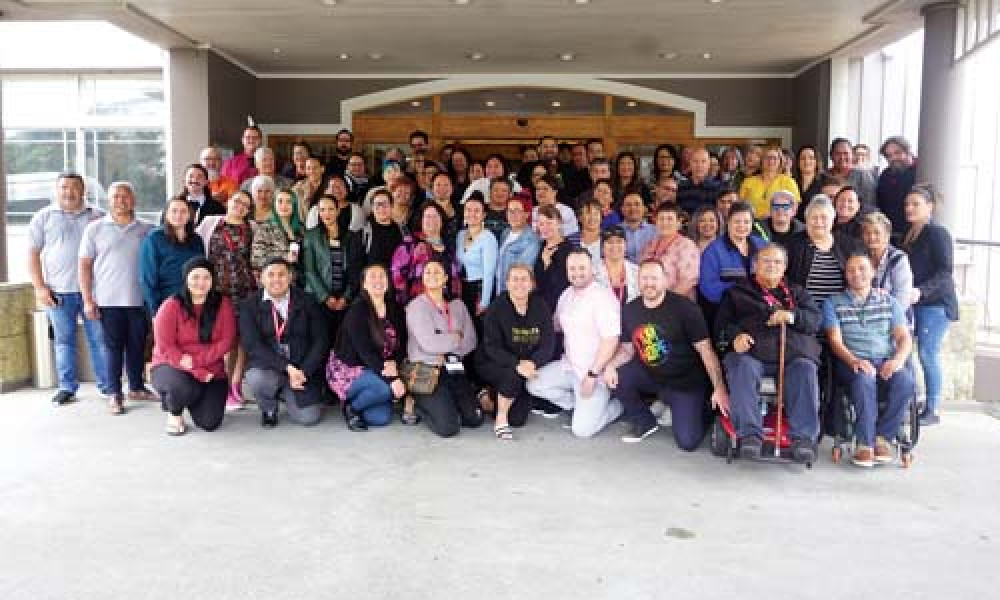
We have just celebrated PSA’s membership reaching 90,000 strong. We are now excited to celebrate the number of PSA members who identify as Māori and collectively, as Te Rūnanga o Ngā Toa Āwhina has passed the 10,300 mark and is still growing.
The increase in Māori membership is important at a time of uncertainty for workers in the public service with the election of a new government coalition. More Māori workers joining the PSA gives Māori a stronger voice to challenge the coalition’s policies of reducing the public service and its ability to deliver services to Māori.
The growing strength of our Māori membership means that the PSA, through Te Rūnanga o Ngā Toa Āwhina, has more influence on the Crown continuing to meet its obligations to Māori under Te Tiriti by supporting Māori and in particular kaimahi Māori who are working hard to deliver services.
This includes improving the way the government delivers public and community services that value and support Māori workers to ensure equitable outcomes to Māori, challenging any attempts to reduce and undo these services and their support.
Members who identify as Māori make up more than 11% of the union membership. And with more than 1400 delegates identifying as Māori, which is 33.2% of total PSA delegates,
members of Te Rūnanga are stepping up and doing the mahi on behalf of the wider membership.
Nearly 48% of members who identify as Māori work in the Public Service sector, with about 22% working in the Health Sector, nearly 12% in Community and Public Services, more than 10% in the State Sector, and nearly 9% in Local Government.
Sharing the significant value that the growing numbers of Māori in the PSA brings to the public sector, with, and on behalf of Māori, offers Māori workers the opportunity to become more resilient with a stronger voice in these uncertain times, not just for Māori but for all workers.
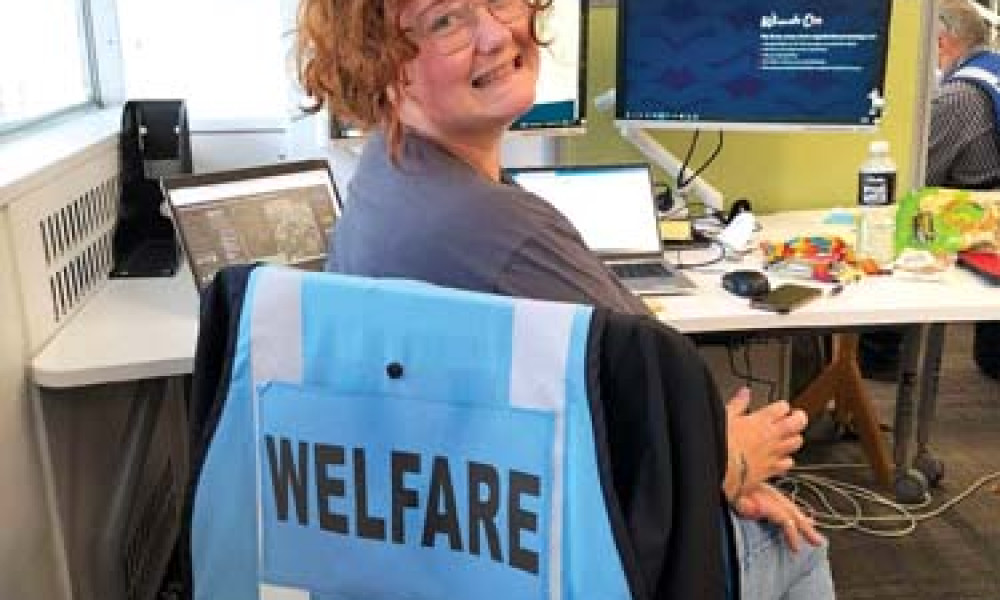
The waters have receded from January’s Auckland Anniversary Weekend floods, but the recovery continues. PSA member Kath Ashley’s ongoing work supporting Aucklanders after the floods echoes the efforts of members nationwide, helping New Zealanders recover from natural disasters.
Before the Auckland Anniversary Weekend floods, Kath was working as a librarian for the Auckland Council. After the floods, she walked into the Tāmaki Makaurau Recovery Office, and never left.
From 27 January 2023, Auckland faced unprecedentedly high rainfall and catastrophic flooding, recording its wettest day on record since 1985.
The flooding resulted in four deaths, widespread displacement and the loss of countless homes, pets and local infrastructure.
“I was really lucky, it could’ve been a lot worse. My flat’s in the middle of a flood zone. Thankfully, it was only our laundry that flooded.”
Soon after the initial devastation, Kath was seconded to the newly formed Tāmaki Makaurau Recovery Office as a Recovery Specialist.
Kath was grateful to the support she had received from the PSA when the details of her new role were first being worked out. “Knowing I could turn to our local organisers to make sense of my new place in the recovery efforts was so helpful. It’s good knowing the PSA’s in our corner.”
Healing together
Eleven months on, she’s supporting the community as the city heals.
“We’ll be in recovery for a long time. Once you go into the communities that have been devastated…it’s beyond words. There’s broken roads, slips everywhere, houses are abandoned.
“It’s a tale of two cities. Some have been very densely affected and others experienced a bit of rain.”
The floods have started a discussion about the collective trauma people suffer in the wake of catastrophe.
“There’s a lot of anxiety in our communities. If I had a dollar for every time I heard ‘I get anxious when it rains’, we’d be able to fund all of our projects. They’re incredibly strong for what they’ve been through.”
Affected communities are over being brave and strong, and just want to get on with it, Kath says.
There have been some highlights, such as the return home of a community member’s pet turtle, after disappearing during the flooding.
“We were celebrating around the office after that email,” Kath says.
“It’s little wins you cherish after seeing so much hardship.”
Moving on
Staff in the Recovery Office are also looking forward to when they are no longer needed.
“There are a lot of amazing people in the team. There’s not a lot of places where you work towards not being needed anymore,” Kath says.
Kath and the Recovery Office are looking at the incoming summer to hold community events, in hopes to bring Auckland together in wake of the flooding. Linking communities is the priority, she says.

Lesley, PSA Māori Vice President and Tuakana of Te Rūnanga o Ngā Toa Āwhina Komiti, spoke to the Congress as part of Decolonising Labour Regimes.
In her address Lesley said recent research shows that 93% of Māori experience racism of some form every day with 96% saying racism is a collective problem for their whānau a lot of the time, and cite racism as having its roots deep into the unequal distribution of power. This functions to position Māori as lesser than Pākehā, and results in the continued marginalisation of our Indigenous people.
The PSA's commitments
“As a union dedicated to promoting workers' rights in New Zealand’s public and community services, the PSA is uniquely positioned to challenge and dismantle the ongoing impacts of colonialism and racism and take a leading role in
championing justice and equality for Māori.
“The PSA supports and ensures the Crown’s obligations for its Māori Tuakana Lesley Dixon addresses global congress on fighting racism members in public and community services are met. It is my view, and my challenge to you all, that your trade union is also uniquely positioned to challenge and dismantle the ongoing impacts of colonisation and racism in your respective countries.
“As unionists, we believe that by speaking up collectively, we can make the change that benefits us all.”
Lesley went on to say that discrimination is multifaceted, and not limited to overt racism – it can take many forms in workplace settings, such as a lack of diversity in hiring processes and job promotions, unjust working conditions and wage inequity.
Mana Wāhine
She also touched on the Mana Wāhine claim, or Wai 2864, lodged with the Waitangi Tribunal by Te Rūnanga o Ngā Toa Āwhina. The claim raises Treaty breaches that have relegated generations of wāhine Māori to low paid jobs with vulnerable work conditions, and calls on the Crown to address inequities in employment suffered by wāhine Māori.
“This claim is just one example of how the PSA is leading the way on challenging and dismantling the ongoing impacts of colonisation.
“We are not waiting for the outcome of this claim – we are getting on with the business of making changes in the workplace, and through organising around equal pay for Māori, Pasefika and other ethnic minorities. We have been, and will be, vocal in our challenges against racism.”
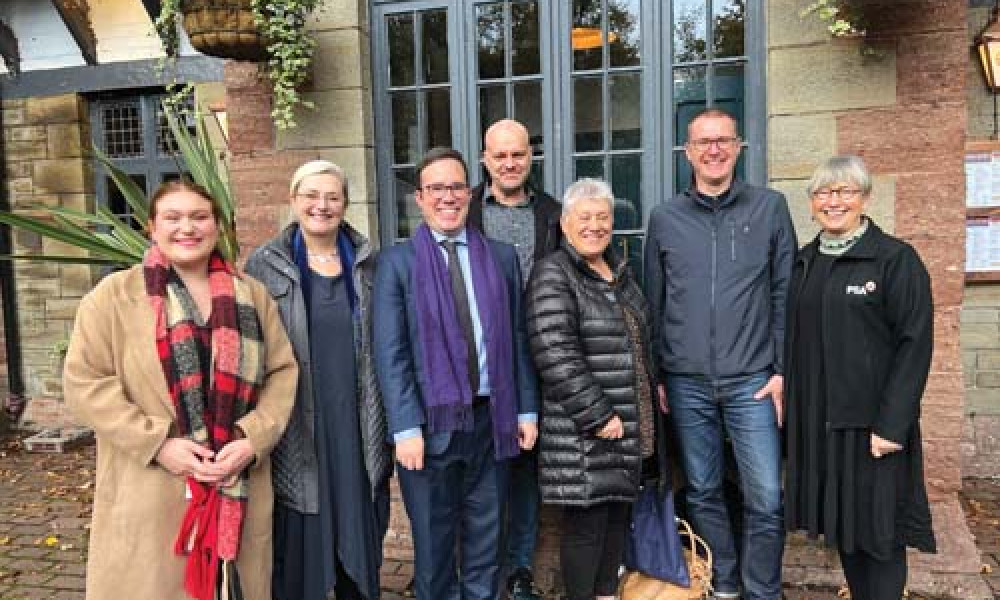
Lesley attended the PSI Conference in Geneva with PSA President Benedict Ferguson and National Secretary Kerry Davies.
Public Services International (PSI) is the global union for workers in public services. Through its 700 affiliates, including the PSA, it represents 30 million workers in 154 countries.
Benedict attended the congress, whose tag line was People Over Profit, along with National Secretary Kerry Davies and PSA Tuakana of Te Rūnanga o Ngā Toa Āwhina Komiti and PSA Māori Vice President Lesley Dixon.
Lesley provided a well-received Māori perspective to the 1200 delegates in a session on the topic of Decolonising Labour Regimes (see our report).
Benedict says the benefit of attending the conference was hearing first-hand about the common issues unions around the world were grappling with including climate change, capitalism, undermining and denigration of public services and public service workers, promoting fair tax regimes, AI and LGBTQIA+ rights.
Benedict says LGBTQIA+ rights are still an issue in many countries and the tensions were evident at the congress where some nations’ representatives walked out on a session he chaired discussing the rights of the rainbow community.
Lesley says she found the congress uplifting and motivating.
“However, it also had a sad note to it; hearing about the bad work conditions and poor or non-existent pay for many of our brothers and sisters in poorer and exploited countries. Exposing and trying to improve these conditions is what Public Services International is about,” Lesley says.
Kerry was struck by the sense of camaraderie and common purpose across the delegates.
“Despite our diversity we were dealing with similar issues. The conference demonstrated that in a world where it is easy to be divided by our differences, unions provide an opportunity to come together to stand up for public services and push to prioritise People Over Profit!” Kerry says.
At the congress PSA National Secretary Duane Leo (who did not attend) was confirmed as the Asia Pacific representative on the PSI executive.
The PSA representatives also visited the United Kingdom where they met union officials in England and Wales. Wales, which has had a Labour government for more than 20 years, has a social partnership approach, which means all government agencies must engage with unions.
“The benefit of this approach is that by listening to the workers’ voice you get better policy,” Benedict says.
In England, the representatives of Prospect, the 155,000 member-union whose members include civil servants, and the Trade Union Congress, were hopeful of a Labour victory in next year’s General Election after 13 years of Conservative government.

Nancy says that when she first received an email advising her about the award, she thought it was spam – and nearly deleted it! Fortunately, she opened the message.
Nancy started working in the health sector in 2008, and soon after became a PSA delegate.
The fight for equal pay
She began advocating for South Island DHB administration staff, after the incoming National government chose not to fulfil the previous Labour-led government’s promise to adjust pay rates for all women working in DHB administration jobs. This meant the process already underway with North Island DHBs was halted. For Nancy it was the start of another 13 years of advocacy, through two major earthquakes, terrorist attacks and a global pandemic.
In April 2018, Nancy became the Women’s Network representative on the PSA DHB Admin Equal Pay negotiating team and in June 2022 was overjoyed to see the claim finally settled. The DHB Admin claim was the first settled under the new Equal Pay Act, helping open the door for the many subsequent claims that have followed.
During her time on the Women’s Committee, Nancy has advocated passionately for Equal Pay, as well as numerous other women’s issues.
In this together
She was deeply touched to be nominated for a QSM but feels the award is representative of the efforts of many within the PSA – both male and female – who have worked tirelessly to progress the rights of New Zealand women since our union’s inception.
Nancy was pleased to share her special day with PSA delegate friends and colleagues Jeanette Wilkinson, Jaime Hewitson-Townley and Jennifer Rankin, who worked with her on the DHB Admin Equal Pay negotiating team. Team member, Debs Williams, was sadly unable to attend in person but was with them in spirit.
Nancy says there is much that is still to be achieved in the Equal Pay arena, including Pay Transparency, Equal Pay for care workers and the elimination of the ethnic gender pay gap. She is proud to continue working on these and many other women’s issues through her role on the Women’s Committee.
The NSC comprises of a delegate representative from each of New Zealand’s Crown Research Institutes (CRI) and Callaghan Innovation, and is supported by PSA Science sector organisers. The purpose of this Committee is to collectively better the working conditions of our Science workforce; to influence government policy and the Science sector; and to communicate sector progress back to the Science workforce.
Recognising the hard work by the NSC in recent years, the Ministry of Business, Innovation and Employment (MBIE) appointed a PSA position to the Future Pathways Reference Group (FPRG), an industry group representing a range of peak bodies and professional organisations, providing MBIE with support in their decisions in the sector.
Grant was recently nominated as the PSA representative to the FPRG.
“Being able to guide specific policy documents of the Science sector reforms has been quite useful. I can bring a perspective that the policymakers, and other members of the reference group, may not have,” Grant says.
Shaping science policy
“We became more engaged in the Science policy space when we provided a PSA submission on the 2019 ‘Draft Research, Science and Innovation Strategy’, as drafted by MBIE. We were also consulted on the Te Pae Kahurangi CRI review, as one of the CRI stakeholders. It was great to see some of our own words clearly represented in the final review document,” Grant says.
Future pathways
Following the release of Te Pae Kahurangi, MBIE announced that it would embark on a series of significant reforms to the New Zealand Science system. MBIE released the Future Pathways Te Ara Paerangi “white paper”, or background report, outlining the direction that changes to the sector will take.
The NSC has prioritised members’ voices in Te Ara Paerangi, by providing written submissions into the government process, meeting directly with Science policy experts within MBIE, and organising face-to-face meetings with the Minister for Science.
This work was invaluable for ensuring that the voice of the Science workforce was heard at all levels of the decision-making process.
New Zealand’s Research, Science, and Innovation sector is earmarked for significant changes over the next few years. Starting with their briefings to incoming ministers, or BIMs, the Committee aims to continue to be a voice for its membership and for the wider Science workforce.

Film – Pride (2014)
Available to watch on TVNZ+
Pride (2014) is based on a true story, offering a heartwarming and rousing look into the genesis of the Lesbians and Gays Support the Miners (LGSM) alliance, which came to be during the National Union of Mineworkers’ 1984-1985 strike.
After the Thatcher government seized the National Union of Mineworkers’ funds in attempts to destabilise the union during the strike, gay rights activist Mark Ashton gathered his friends and collected donations for the union at the 1984 London Lesbian and Gay Pride march. This led to the creation of the LGSM, and entrenched solidarity between LGBTQIA+ people and unionists for decades to come.
Pride does a fantastic job of showing us what solidarity between oppressed groups looks like historically, and leaves the viewer empowered and hopeful.
Book – Untouchable Girls: The Topp Twins Story by Jools and Lynda Topp
Untouchable Girls: The Topp Twins Story navigates the life of the beloved Topp Twins – from their first talent show at Huntly College hall to the trials and tribulations of fame. Their storytelling is hilarious, touching, boldly honest, and, above all, laced with the unmistakable charm of Jools and Lynda Topp.
Palestinian trade unions call to action
On October 16, trade unionists in Palestine issued an urgent call for workers around the world to stop work in relevant industries that aid Israel’s siege and bombardment of Gaza and the occupied West Bank, creating a mass humanitarian
catastrophe.
The unionists asked for workers to refuse to build or transport weapons destined for Israel, to take action against companies who are involved in Israel’s siege, and to pressure governments to stop all military trade with Israel.
Workers around the world are responding to the call – on
November 8, a Melbourne shipyard was forced to stop work after unionists and protestors blocked the road, preventing entry to supply trucks carrying weapons bound for Israel.
Demonstrations across the globe continue as workers call for a ceasefire, and the end to Israel’s siege.
WGA + SAG-AFTRA strikes
Lasting from May 2 to September 27, 2023, the Writers Guild of America (WGA) went on strike, in protest of the use of AI, low streaming residuals, and unsustainable working conditions.
The agreement that ended the strike, ratified on October 9, holds several concessions in favour of the writers – average pay increases for writers and editors working on made-for-streaming projects and multi-episode TV series, “success-based” residual payments, and protections from AI.
The Screen Actors Guild-American Federation of Television and Radio Artists (SAG-AFTRA) began their strike parallel to the writers on July 14, with much of the same concessions being asked of the Alliance of Motion Picture and Television Producers (AMPTP) – protections from AI likeness replication, wage increases and better working conditions.
At the time of writing, SAG-AFTRA have suspended the strike and are working through a tentative deal with the AMPTP.
Voice to Parliament referendum fails
On October 14, the Voice to Parliament referendum in Australia was defeated, with the public returning a majority No result in all six states and nationally.
If passed, the referendum would ‘alter the Constitution to recognise the First Peoples of Australia by establishing an Aboriginal and Torres Strait Islander Voice.’
The referendum was introduced by the Albanese government after being proposed through the Uluru Statement from the Heart. The Statement was created following the First Nations Dialogues, an extensive six-month consultation with Indigenous communities across Australia, to ascertain how constitutional recognition of Aboriginal and Torres Strait Islander peoples may be best accomplished.
The Australian Capital Territory jurisdiction is the only territory to have voted Yes, and areas with larger Indigenous populations returned an overwhelming Yes majority.
Some Indigenous communities and leaders became galvanized to build on the groundswell of Yes voters following the result, and some called for, and observed, a national week of silence to mourn the result.
Opposition MPs accused the government of prioritising the referendum over more pressing issues like the cost-of-living crisis, alleging this to be why the referendum failed.
The referendum result has ultimately highlighted that there is still much work to do to gain constitutional representation and recognition for the Indigenous peoples of Australia.
The Charter, which is seen as a critical part of the health reforms, formally recognises the value of all health care workers in the Health and Community and Public Services Sector and their right to be supported to carry out their duties in safe workplaces. It also underlines the importance of the worker and union participation for the realisation of the Charter.
The planned changes to the health system that were the impetus for the Charter were announced by government in April 2021 and a Transition Unit was set up by Cabinet to implement the reforms.
Two new entities Te Whatu Ora (Health New Zealand) and Te Aka Whai Ora (the Māori Health Authority) were established in July 2022 and in August 2023 the then Minister of Health Dr Ayesha Verrall endorsed the Charter.
The PSA's contribution
The PSA played a critical role in developing the Charter. Shortly after the health reforms were announced, the PSA founded the PSA Health Delegates Working Group made up
of members and delegates from the former District Health Board (DHB) sector and Community Public Services (CPS) sector.
The working group, as well as the Health and CPS Sector Committees, Te Tira Hauora, Te Rūnanga o Ngā Toa Āwhina, the Deaf and Disabled network, the Mental Health and Addiction Committee and the Pasefika Network made significant contributions to the main structural reforms and the development of the Charter.
PSA members persisted with the Charter work through all the disruptions, pressures, staffing shortages, and uncertainty created in hospitals and in the community by the continued spread of COVID-19.
As a result of this effort, PSA members and delegates achieved some crucial wins for health workers by ensuring the Charter:
- Underlines that workers and their unions are treated fairly and with respect and dignity
- Upholds the importance of workers and their union
- Supports meaningfully involving unions in decision-making
- Values strong workplace relations between organisations and unions
- Holds organisations accountable for implementing the Charter.
Using the Charter
The Charter has the potential to be a mechanism to create a better, more equitable, sustainable and integrated health system. Stacey Muir, a member of the PSA Working Group and a delegate on the Health Sector Committee says, “The Working Group has always advocated that the Charter should be established as the foundational base for Te Whatu Ora so that Charter values are adhered to with any change that is implemented. Had this been in place the development of Te Whatu Ora would have been smoother sailing! PSA delegates know the value of the worker voice in an organisation, the sooner the Charter is implemented the better so this can be achieved.”
Michelle Troup, another member of the Working Group and delegate on the CPS Sector Committee adds: “To create a truly integrated and joined up health system we need to treat workers the same. Currently we (CPS workers) are not valued the same or treated the same as our colleagues in hospitals. The Charter is also our Charter. And we will use it! Treating workers decently goes hand in hand with high quality, joined up services.”
The Charter is a big step forward but it is only the first step on a longer journey. While health organisations are accountable for implementing the Charter, it will be up to union members to keep the pressure on these organisations to act on their responsibility.
To ensure the aims of the Charter become a reality, union members will need to use it to organise, to improve collective bargaining outcomes; advance health, safety
and wellbeing provisions; and to push for safe staffing levels, participation in decision-making and for a physically, mentally and culturally safe working environment.
The Charter is a powerful tool if we choose to use it!
A values-based approach
The Charter sets out values (the pou) and principles which guide individual, team and organisational behaviour:
Wairuatanga
Working with heart, the strong sense of purpose and commitment to service that health workers bring to their mahi.
Rangatiratanga
As organisations we support our people to lead. We will know our people; we will grow those around us and be accountable with them in contributing to Pae Ora for all.
Whanaungatanga
We are a team, and together a team of teams. Regardless of our role, we work together for a common purpose. We look out for each other and keep each other safe.
Te Korowai Āhuru
A cloak which seeks to provide safety and comfort to the workforce.

The Ministry of Works (MoW) was a stronghold of PSA membership until it was disestablished in 1988.
For more than a century, public servants working for the MoW and its predecessors provided the technical expertise and labour to build most of New Zealand’s public infrastructure – roads, bridges, schools, hospitals, and state housing.
Now an updated MoW – a Ministry of Green Works – is being proposed to address our housing and infrastructure delivery issues. A remit supporting the proposal was passed at the recent Council of Trade Unions biennial conference.
The Ministry of Green Works idea was first floated in October 2021 in a FIRST Union proposal, which attempting to address four interlinked problems:
- The capacity of the private sector to deliver housing (especially public housing) at scale is inherently limited by the profit motive.
- Contracting out hasn’t been as accountable, efficient, and innovative as promised, and has drained capacity from the public sector while generating other risks, especially in health and safety.
- Public sector retreat from the construction, and wood and forestry sectors has dragged working conditions backwards, creating persistent labour and skills shortages, as well as limited security of tenure and high worker turnover.
- Greater public sector coordination is required to tackle climate change and ensure that new housing and infrastructure help reduce long-term emissions.
The proposed ministry would have construction, design and oversight arms to develop public housing and green infrastructure. It would develop public sector capacity by progressively “in-sourcing” activities that are currently outsourced to the private sector, embedding social and environmental protections at the same time.
There are a number of PSA members working in this space who have significant expertise and experience. A survey of members working at agencies such as MBIE, Kainga Ora, Ministry of Housing and Urban Development (MHUD) and Waka Kotahi showed support for the idea but uncertainty about how such as organisation might work.
Consideration needs to be given to whether “green infrastructure” work would be better performed by existing agencies (like Kainga Ora or Rau Paenga), or whether other structures (like a Crown Entity or an interdepartmental collaboration) makes more sense.
There’s also the question of what this organisation would need to do that Rau Paenga (our new national infrastructure delivery agency), or the infrastructure agency the new government campaigned on establishing, won’t do.
Workers’ voices can help answer these questions - that includes workers in the public sector, and in the largely un-unionised construction and forestry sectors and other parts of the supply chain.
Keep an eye on PSA News for opportunities to contribute your ideas in coming months. And if you have a view, let us know your thoughts at communications@psa.org.nz.
This is an opinion piece and the views expressed in it do not necessarily reflect the views of the PSA.
Got a question? Get in touch with one of our PSA team members today:
PSA House, 11 Aurora Terrace
Wellington, New Zealand.
PO Box 3817,
Wellington 6140

